Encrypted communication: UK remains member of EU interception group

Despite Brexit, British police can influence surveillance laws in the EU. The country is also represented in European secret service circles.

Notwithstanding its exit from the European Union, the British police will remain a member of a Standing Heads of Lawful Interception Units based at Europol. The UK is represented there by the National Crime Agency. This was confirmed by the EU Commissioner for Home Affairs, Ylva Johansson, in her answer to a parlamentary question by the pirate Patrick Breyer. The UK is thus the only third country in the group, which otherwise consists exclusively of EU members and the Schengen states Norway, Switzerland and Iceland.

The working group of the departments on telecommunications surveillance had once been founded as a strategic „5G Expert Group“ on the initiative of the German Federal Criminal Police Office. It was supposed to give the authorities access to the new telephone standard, which was actually tap-proof. After this was successfully pushed through in the European and international standardisation bodies ETSI and 3GPP, the group was given a new name and new tasks in October 2021. It is now to ensure that the needs of law enforcement agencies are taken into account when amending surveillance laws at EU level and in the member states. „Encrypted communication: UK remains member of EU interception group“ weiterlesen

British NGO: 26 countries have armed drones

Every year, Drone Wars UK counts the number of countries that have medium-altitude, long-endurance armed drones. Some of them, however, do not use them at all. Another six governments are planning to procure them, including Germany and Poland.

At least 26 states have so far procured armed drones or are manufacturing them themselves. Eleven of them have already used the systems in cross-border conflicts, and nine governments even fly attacks within their own borders. This is reported by the London-based organisation Drone Wars UK in its now published annual report.

The count only includes armed drones of medium altitude and long endurance (MALE), such as the „MQ-9 Reaper“ from the USA or the Turkish „Bayraktar TB2“. Not listed are states that use so-called kamikaze drones. These „loitering munitions“, which are also becoming increasingly popular with NATO states, are similar to a missile that can circle above its target before impact and swoop down on it at a favourable moment. The entire system is destroyed in the process. „British NGO: 26 countries have armed drones“ weiterlesen

Ukraine war: New Eurojust regulation in fast-track procedure

Eurojust is to be allowed to store and process personal and biometric data for the first time.The EU Justice Agency will also be authorised to analyse digital evidence, but it does not actually have a mandate to do so.

The Permanent Representatives of the EU Member States today agreed on a position on the new Eurojust Regulation. The agency is responsible for judicial cooperation in criminal matters and coordinates cross-border investigations. Among the new proposals, Eurojust will be allowed to secure and process evidence on war crimes, genocide and crimes against humanity. The three criminal offences enshrined in the Rome Statute of the International Criminal Court (ICC) are part of Eurojust’s mandate, but the establishment of a biometric database is not yet part of it.

The background to this is the war in Ukraine, on which the agency is to take action following a request from the EU Council of Ministers for „Justice and Home Affairs“. Eurojust is supposed to support European and international courts and the in securing evidence. Because the measures required for this are urgent, the Eurojust Regulation will also be adopted in a two-month urgent procedure. The Commission had presented a corresponding legislative proposal only last week. Four days later, the Member States in the Council dealt with it for the first time. „Ukraine war: New Eurojust regulation in fast-track procedure“ weiterlesen

Hensoldt: New German platform to be able to jam Russian air defense radars

The Bundeswehr is modernizing its electronic warfare capabilities. A new system is to be fitted to Eurofighters once it has been developed

Hensoldt, a German company specializing in sensor technology, has developed Kalaetron Attack, an electronic warfare system. Recent ground tests have proven its effectiveness in „current threat scenarios“, the German defense company writes in a press release. According to it, the platform is a „technology leap“ and could jam even the latest Russian radars.

Kalaetron Attack consists of various components to deceive, suppress and disrupt enemy capabilities in the air, on land and at sea. The same system is also said to be able to be used passively as a reconnaissance sensor. Thus, the platform might secure „freedom of movement“ in a contested electromagnetic environment, thereby increasing the effectiveness of friendly forces. „Hensoldt: New German platform to be able to jam Russian air defense radars“ weiterlesen

EU agency awaits requests for new maritime rescue drone

The Maritime Safety Agency EMSA has signed a four-year contract for new drone flights. But operational locations are still unclear because required flight permits and approvals are causing problems.

The European Union’s seas are increasingly becoming testing tracks for drone surveillance. The border agency Frontex has been monitoring the Libyan sea rescue zone for a year with an Israeli „Heron 1“; boats with refugees are reported to the coast guard in Libya for forced returns. Now Frontex wants to station such a long-range drone on Crete.

The European Maritime Safety Agency (EMSA) also uses drones for maritime surveillance and was even significantly faster than Frontex in doing so. After a joint test six years ago, EMSA had been looking for companies to fly drones, and in the meantime the Lisbon-based agency has spent a three-digit million sum on them. „EU agency awaits requests for new maritime rescue drone“ weiterlesen

EU Parliament approves: New Europol Regulation on the home straight

The EU police agency gets a new legal basis after six years. The expansion of its powers is hardly matched by new possibilities for supervision. A parliamentary control group even proves to be a driver for the expansion of an already powerful agency.

The EU Parliament has voted by a large majority to extend Europol’s powers. The negotiators of the Home Affairs Committee and the Council had agreed on the new regulation in February. With 480 votes in favour, 143 against and 20 abstentions, it was now approved in plenary.

The new text considerably expands the powers of the police agency based in The Hague. As in the investigations into the encrypted messenger services Encrochat and SkyECC, Europol will in future be allowed to receive millions of pieces of data from private companies in order to analyse them. Also in the area of crimes against the sexual self-determination of children, Europol will in future receive large data sets from companies and process them forensically. „EU Parliament approves: New Europol Regulation on the home straight“ weiterlesen

European Court of Justice: Controls at the Schengen borders may not be extended arbitrarily

Some EU members still control their internal borders excessively. However, exceeding the time limit of six months is incompatible with the Schengen Borders Code. Governments and the EU Commission must now react.

The lifting of internal border controls is often praised as the greatest achievement of the European Union. However, especially for migration control, many countries have made use of the possibility of temporary reintroduction and have extended this regulation, sometimes dozens of times. This is contrary to EU law, ruled the Court of Justice of the European Union (ECJ) in Luxembourg last week.

The case was brought by the Austrian citizen N.W., who refused to show his passport at a checkpoint at the Slovenian border in Austria and was ordered to pay a €36 fine for this according to a court ruling. In a second case, W. challenged the judgement. The Regional Administrative Court of Styria therefore referred the matter to the ECJ for a preliminary ruling. Now the courts in Austria have to deal with it again. „European Court of Justice: Controls at the Schengen borders may not be extended arbitrarily“ weiterlesen

Secret German drone defence

The Federal Police secures all German commercial airports against unwanted approaches by small copters. Mobile installations are followed by a stationary platform

Obstructions caused by small drones at German airports remain at the same level as in previous years. In 2021, 98 incidents were reported to Deutsche Flugsicherung. This is according to the Federal Ministry of the Interior in its answer to a parlamentarian question from the Left Party. In 2018, there were 158 incidents, which is the highest figure recorded to date.

Despite this, the government is making great efforts to defend commercial airports against drones. The public is not supposed to know which mobile systems are installed there. The reason given is that knowledge would allow „opponents“ to draw conclusions about the technical capabilities of the police authorities. „Secret German drone defence“ weiterlesen

Ukraine reportedly counters Russian attack on Starlink satellite service

Russia’s electronic warfare falls short of Pentagon expectations, nonetheless the US Navy is moving an electronic warfare squadron to Germany

Shortly after the Russian war of aggression began, Ukrainian Deputy Prime Minister and Minister of Digital Affairs Mykhailo Fedorov asked billionaire Elon Musk to unlock his Starlink satellite service. In the event of a breakdown in digital infrastructure, the military and civilian population should still have internet. In March, the system was probably the target of Russian electronic attacks, which were thwarted by Ukraine.

A small change in the program code of the control software was sufficient for this, explained the director for electronic warfare in the office of the US Department of Defence, Dave Tremper at the C4ISRNET conference on Wednesday in Washington. „From electronic warfare technologist’s perspective, that is fantastic… and how they did that was eye-watering to me“, Tremper commented. The United States therefore urgently needs to improve its own rapid response to such attacks, other conference participants said. „Ukraine reportedly counters Russian attack on Starlink satellite service“ weiterlesen

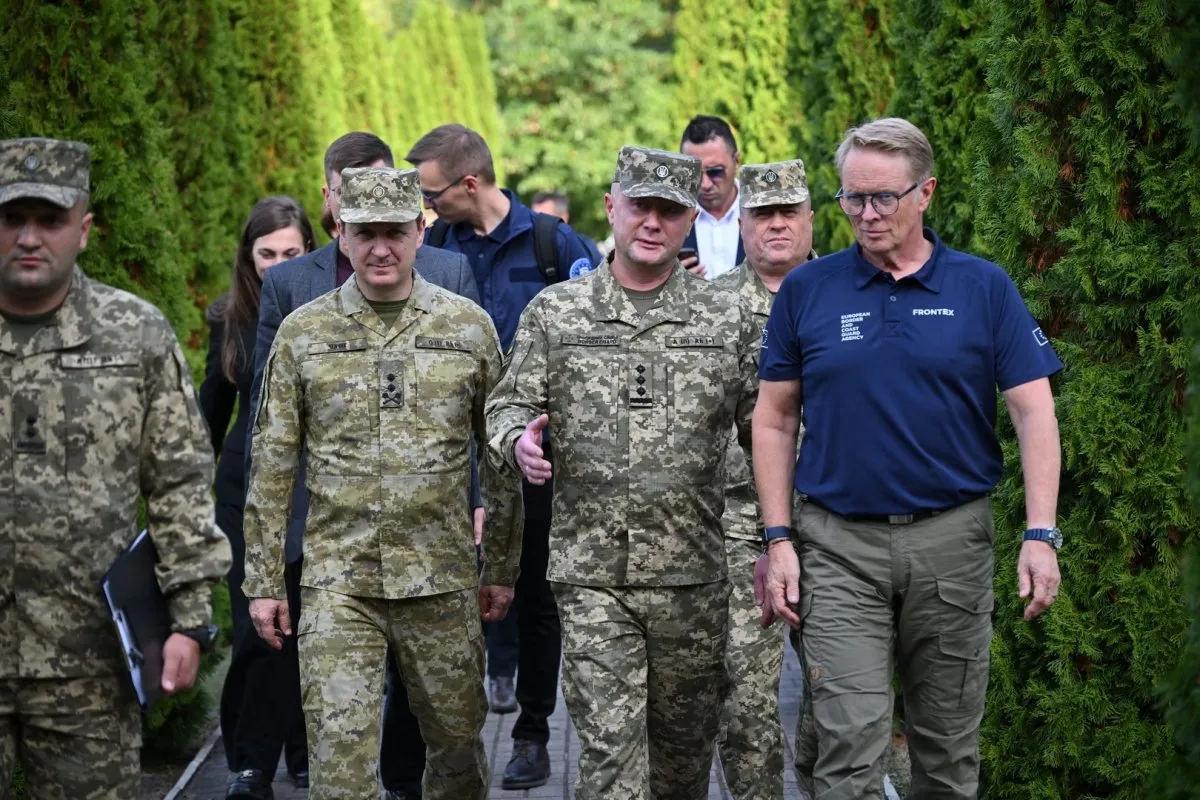
Mediterranean Sea: Frontex claims to have detected 13,000 refugees with drones

After in Malta, the EU border agency is now stationing a long-range drone on Crete. There is contradictory information on the surveillance technology on board.

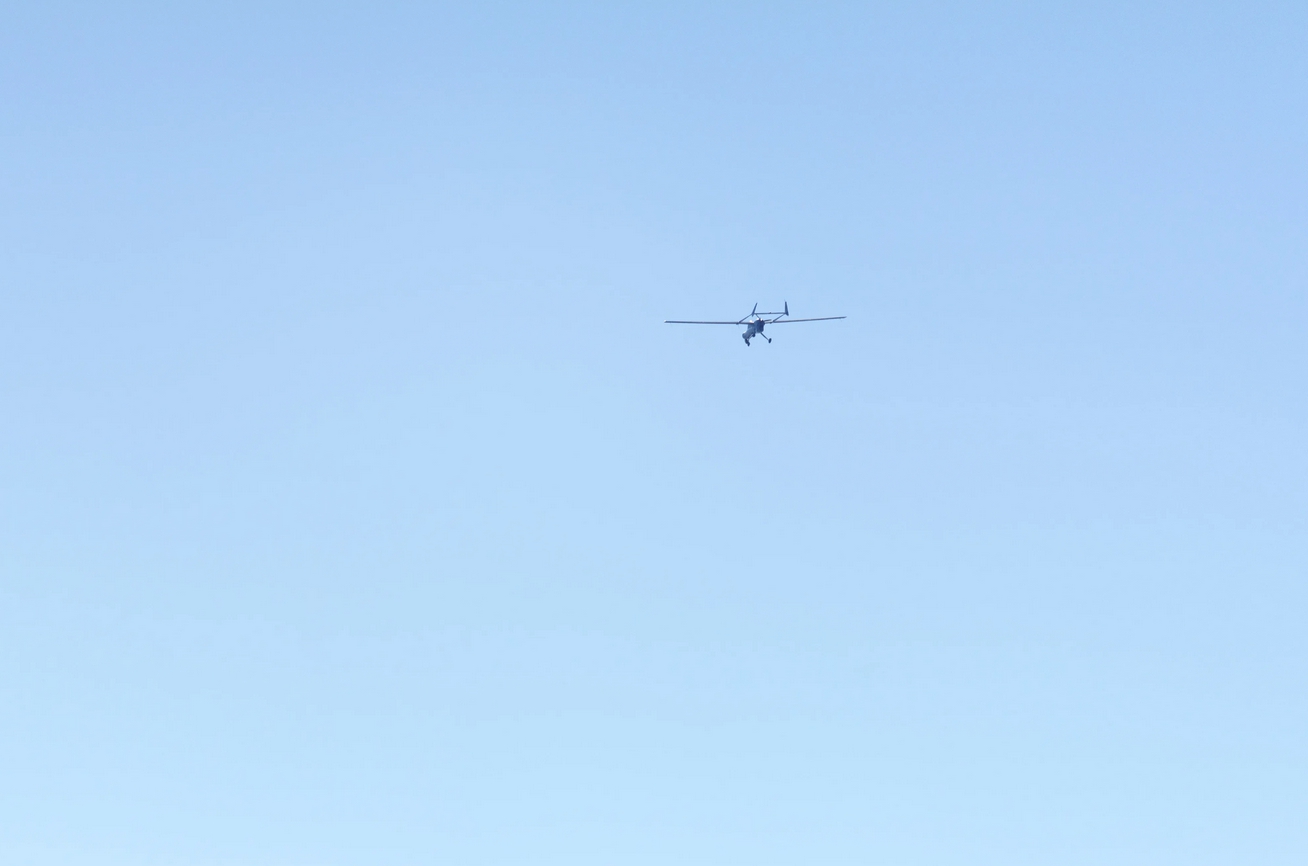
According to its own figures, Frontex has detected at least 13,000 refugees in 300 cases with the help of long-range drones and reported them to the responsible coast guards. Since May last year, the EU border agency has stationed a Heron 1 from the Israeli arms company IAI in Malta for such missions. The drone is officially registered to the Maltese Air Force.

The contract for Frontex drones was awarded to the German branch of the Airbus Group in Bremen, which also flies four Heron 1s for the German armed forces in Mali. They are controlled from a mobile facility located at the international airport near the Maltese capital Valletta. Other Airbus technicians are responsible for maintenance and repairs there. „Mediterranean Sea: Frontex claims to have detected 13,000 refugees with drones“ weiterlesen