-
Disrupted supply chains: Chip shortage hampers new EU databases

An EU agency is building a recognition system with biometric data on 400 million travellers. The contractors seem to have overstretched themselves In future, anyone wishing to enter the European Union without a visa will have to register in a… Further reading
-
Frontex: Migration control from space
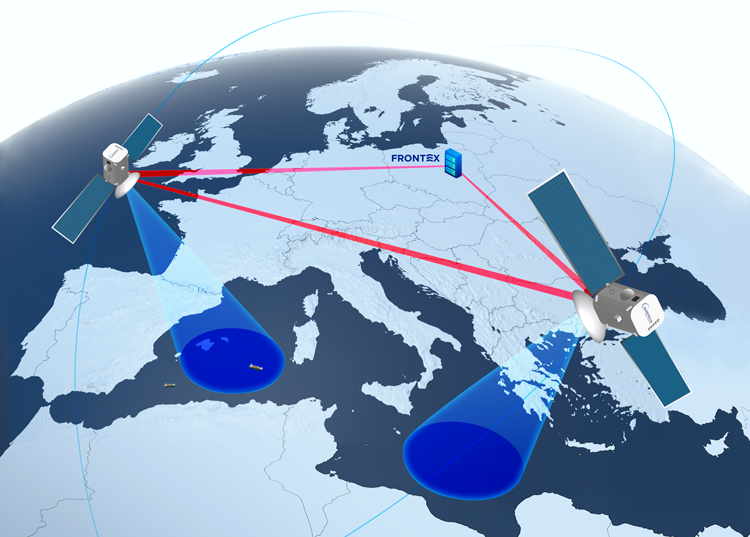
In EUROSUR, EU member states use various satellite services for maritime surveillance. Frontex and the Maritime Security Agency conclude cooperation agreements with the “Copernicus” programme for this purpose. All the information Frontex collects at the EU’s external borders is fed… Further reading
-
Heron TP in Israel: Germany now arms its drones

With the decision to buy 140 missiles, the German “drone debate” comes to an end after eight years. All details about the weapons are top secret. At the request of the government’s parliamentary groups, the Bundestag’s Budget and Defence Committees… Further reading
-
Ukraine war: The age of loitering warheads is dawning

Initially, the Ukrainian military dominated the drone war against the Russian attackers, who are now striking back unmanned. Both sides are relying on a new drone weapon. With the attack on Ukraine, the country has become the scene of a… Further reading
-
“Thin Blue Line”: German police divided on extremist iconography

An internal paper of the Bavarian Police problematises a symbol which stands for a conspiratorial community of solidarity. According to the paper, it is widespread in right-wing police circles and could violate the principle of neutrality and lead to disciplinary… Further reading
-
German ANOM investigations: The mysterious EU third state

The FBI had a crypto-messenger programmed that was fully intercepted. For legal reasons, the US authority received the intercepted communication via detours. Because of “hearsay court orders”, its use in German criminal proceedings is questionable. Ever since the encrypted messenger… Further reading