Informal police networks coordinate undercover operations across borders. From the ECG to the IWG, they exchange on legal frameworks, technical standards and deployment practices – largely hidden from public view.
Undercover investigations are sovereign police measures. If these are to be carried out in other countries, corresponding laws and authorisation are required in and from the host state. With the review of the case of British undercover cop Mark “Stone” Kennedy, it became known that informal police networks from various countries exist for this purpose. They have a mostly strategic character, meaning they do not serve the authorities for carrying out specific operations, but rather for exchanging information about legal frameworks, technical standards and operational practices of undercover police. The groups also discuss new rules and agreements to facilitate cross-border operational cooperation.
European Cooperation Group on Undercover Activities (ECG)
According to the German government, the ECG was founded in 2001/2002, originally as an informal “eastern and western European meeting”. In the last decade, most EU member states participated in the ECG – except Greece, Ireland, Luxembourg, Malta and Cyprus. Other countries can also be included in working groups; during the 2010s these included the Schengen states Switzerland and Norway as well as Albania, Croatia, North Macedonia, Serbia, Turkey, Ukraine and even Russia. The German Federal Ministry of the Interior explains the purpose of the ECG as “professionalisation and coordination” of international cooperation in undercover investigations. This concerns the exchange of information about national legal situations, organisational developments, training standards as well as specific aspects of cross-border operations based on case examples. The ECG meetings usually take place once a year.
International Working Group on Police Undercover Activities (IWG)
The IWG was founded in 1989 as an informal network of police and security authorities from Europe, North America, Australia, New Zealand and South Africa. According to the German government, its purpose is the exchange of experience on “tactical, technical, psychological, organisational and ethical questions” in the context of undercover investigations. Training, security, support and legal frameworks as well as technical developments are also discussed: for example, biometric entry systems also pose a challenge for undercover operatives when, at a border crossing, the fingerprint or facial image does not match the person’s cover name.
Europol
The EU police agency Europol is neither a member of the ECG nor the IWG and also has no mandate for coordinating undercover investigations in EU states. However, Europol has established a “Network of experts on handling informants”, which deals with questions of managing so-called CHIS (Covert Human Intelligence Sources), as “confidential contacts” – that is, non-police officers – are called by authorities. Europol allegedly maintains a register of the persons responsible in member states for managing these CHIS. In addition, Europol operates the closed messaging system SIENA, which serves the exchange of security-relevant data and can be used by individual states for communication about covert sources.
European Surveillance Group (ESG) and Assembly of Regional Groups on Surveillance (ARGOS)
With the ESG – from 2005 to 2017 it was called the Cross-Border Surveillance Working Group (CSW) – as well as the Europol network ARGOS, there are further informal associations of police authorities. They specialise in technical surveillance methods, such as the cross-border deployment of GPS trackers, covert camera technology or mobile units for tracking across national borders. The ESG assembles mainly western and northern European police units (like Austria, Belgium, Denmark, Finland, France, Germany, Ireland, Italy, Luxembourg, Netherlands, Portugal, Spain, Sweden, and in addition Norway, Switzerland and the United Kingdom). ARGOS focuses more on eastern European countries. Recently, the ESG met in Lisbon on 1-2 April 2025. The group also provides tactical and strategic advice on combating “serious and organised crime, terrorism and other significant threats in Europe and elsewhere”. The ESG has now been incorporated into the Law Enforcement Networks Working Group (LENWG) of the EU, established in 2024. This group, chaired by DG HOME, “aims to bolster the preparedness of law enforcement networks to combat evolving threats”. With the participation in LENWG the ESG members can also benefit from funding by the Commission.
Finally, the political departments of the police authorities of all Schengen states have been networking since 1979 in the Police Working Group on Terrorism (PWGT). It was founded in response to left-wing militant movements in Europe in the 1970s. The networking primarily serves the exchange of information – whereby the focus expanded after the end of armed struggle by many groups to more general “political violent activities”.
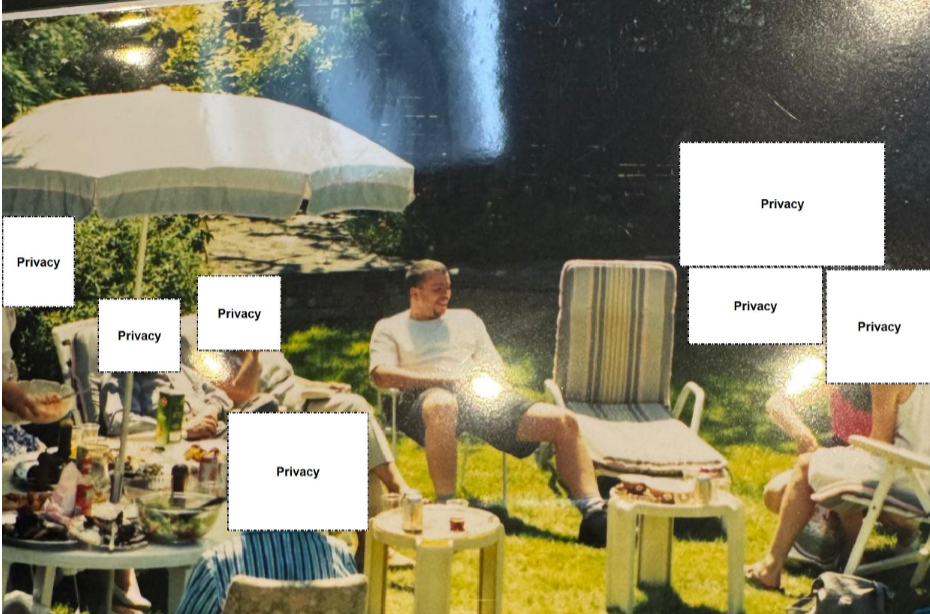
Image: British undercover policeman Mark Jenner, who’s unit was engaged in cross-border operations all over Europe (UCPI investigation, see also MP4).
Leave a Reply