A pro-Palestinian alliance wants to be permitted to wear keffiyehs at the former concentration camp Buchenwald. The memorial says it is appalled. However, its director has corrected a controversial guidance document that became public last year.
Wearing a keffiyeh – known as a “Palestinian scarf” – is not prohibited at the former concentration camp Buchenwald. Last April, however, a woman was refused entry to the memorial because she allegedly intended to display the garment as a protest against Israel. A court ruled that the decision was justified.
A alliance called “Keffiyehs in Buchenwald” is now demanding that the scarf be permitted on the site without restriction. A spokeswoman for the state-funded Buchenwald and Mittelbau-Dora Memorials Foundation described this as a “wholly inappropriate instrumentalisation of the commemoration of the victims of National Socialism” and announced measures should activists attempt to appear with keffiyehs on 12 April, the 81st anniversary of the liberation of the concentration camp. This was first reported by Springer outlets. The alliance’s own call to action does not state as much, though a linked Instagram post says that on the 81st anniversary the group wishes to meet in Weimar to “exchange ideas, educate ourselves and make our demands clear.”
Between 1937 and 1945, Jews, Sinti and Roma, queer people, Communists and international anti-fascists were imprisoned at Buchenwald. 56,000 people were murdered or died from hunger, illness, forced labour or medical experiments. In its call to action, “Keffiyehs in Buchenwald” accuses the foundation of rendering the non-Jewish victim groups invisible.
The survivors set out in the “Buchenwald Oath” the aspiration to destroy fascism and build a world of peace. “Keffiyehs in Buchenwald” considers this legacy unfulfilled and therefore demands “open discussion of the genocide in Gaza” as well as “no bans on entry or speech” regarding that subject. The alliance describes itself as comprising “Jews, queers, anti-fascists.”
“Groups that cheer the terror of Hamas, that glorify the massacres of 7 October as a ‘great surprise’ and deny the state of Israel’s right to exist have no place here,” the Memorials Foundation wrote in a blog post on Monday – in which it also invokes the “Buchenwald Oath.” It remains unclear, however, what this list has to do with the “Keffiyehs in Buchenwald” alliance.
Among those who have signed a petition by the alliance – alongside several pro-Palestinian groups and individuals – are the activist Anna M., who was issued the entry ban, and Iris Hefets of “Jewish Voice for a Just Peace in the Middle East.” The organisation is classified by the domestic intelligence service as a “confirmed extremist movement.”
Last year it caused considerable controversy when it emerged that the Thuringian Memorials Foundation, which includes the former concentration camp Buchenwald, had drawn up a 57-page guidance document intended to help staff identify symbols that could lead to visitors being excluded. The keffiyeh, as well as the call for a ceasefire in the Gaza war, was classified in the document as “hostile to Israel” and therefore antisemitic – even though the Palestinian keffiyeh is recognised by Unesco as an item of intangible cultural heritage, and the German federal government itself supports the conclusion of a ceasefire agreement between Israel and Hamas.
The document also placed the watermelon symbol – used “as a substitute for the Palestinian flag” – in an antisemitic context. The same applied to the accusation of apartheid in the territories illegally occupied by Israel under international law, as well as the view that the Israeli military is committing genocide in Gaza – an accusation that the International Court of Justice has itself found plausible. Furthermore, anyone wearing an olive branch symbol was said, according to the Thuringian Memorials Foundation, to be advocating for the right of return of Palestinian refugees – a right enshrined in international law, though the foundation placed the word in quotation marks – and thereby “calling Israel’s existence into question.”
Wagner has now revised the controversial guidance document, he told “nd” at the beginning of February. It now contains “exclusively symbols, codes and organisations from the far-right milieu.”
Published in German in „nd“.
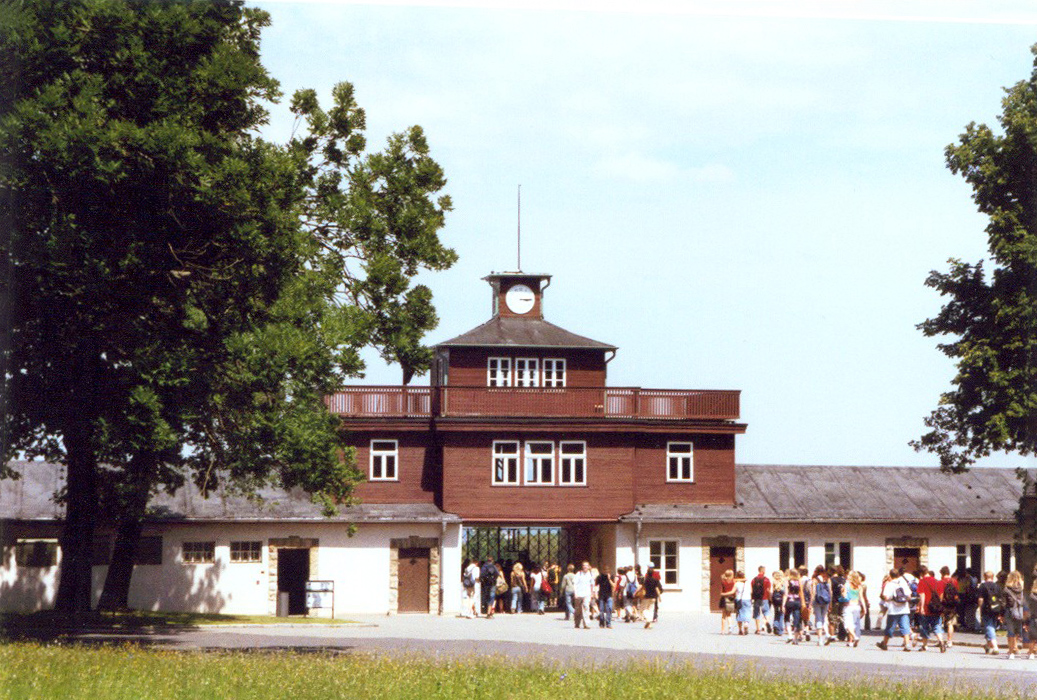
Image: The entrance gate of the former concentration camp Buchenwald (Michael Sander, CC BY-SA 3.0).



Leave a Reply