Customs authorities have now also seized the accounts of the wife of German journalist Hüseyin Doğru. A major journalists’ association supports these harsh sanctions. Another notorious association spreads false claims.
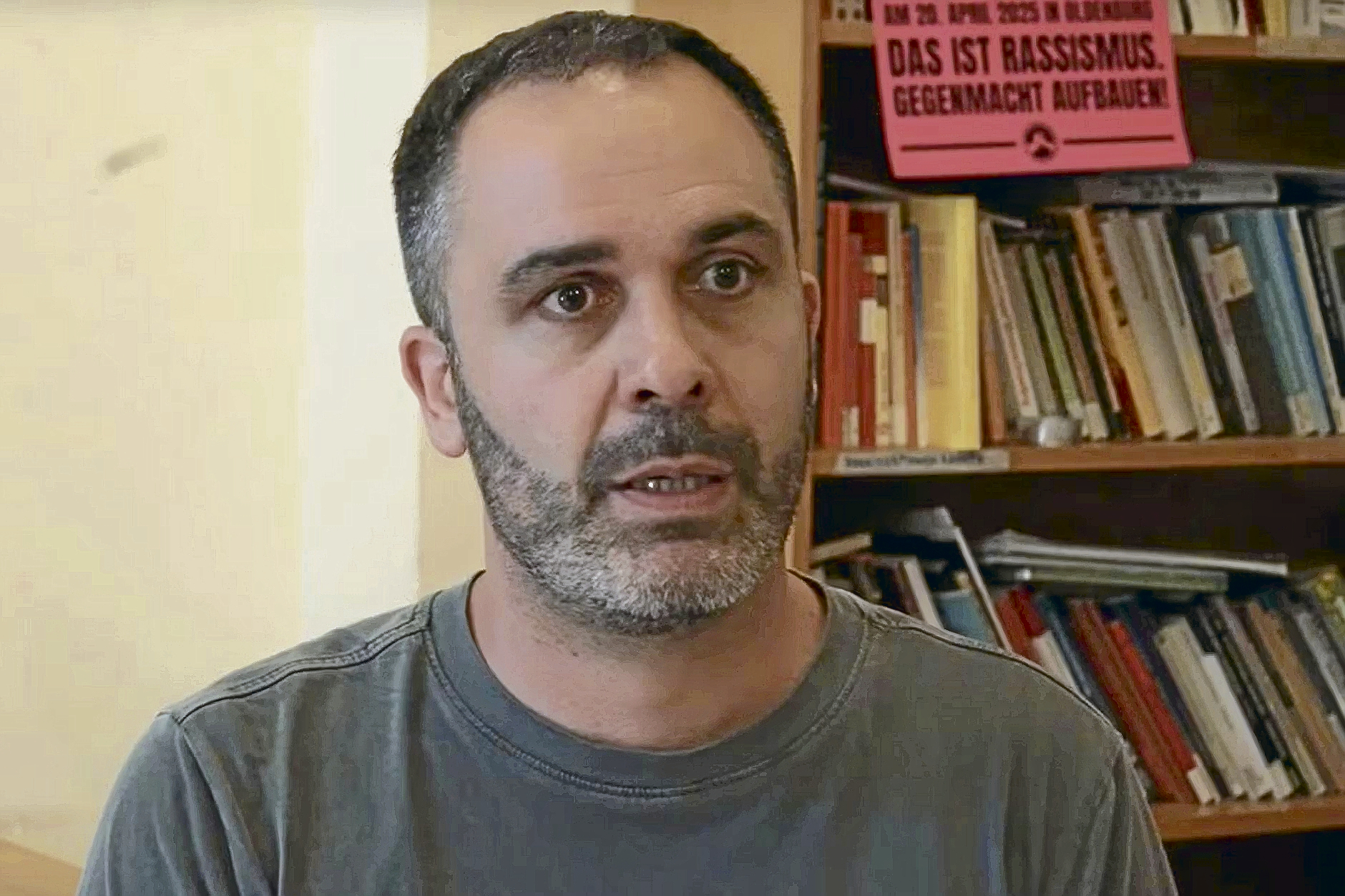
German authorities have now also “secured” the bank accounts of the wife of Berlin-based journalist Hüseyin Doğru. Over the weekend, the German citizen published excerpts on the platform X from a letter issued by the Central Office for Sanctions Enforcement, which is part of the customs authority. His three young children are now “in a humanitarian emergency”, Doğru wrote. “We cannot receive money. We cannot pay rent. We cannot buy food.”
Doğru was placed on a list in May 2025 as part of the 17th EU sanctions package against Russia. EU members accuse him of systematically spreading disinformation through his media company AFA Medya and its associated platform RED, thereby supporting “destabilising activities by Russia”. As justification, reference is made to a RED report from 2024 about a “violent occupation of a German university by anti-Israeli rioters”.
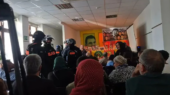
This refers to Humboldt University – “nd” was also among the selected media outlets that were allowed in by the occupiers at the time. During the action, red triangles were also sprayed on walls; the symbol was later attributed to Hamas by the Federal Ministry of the Interior. The sanctions justification claims, without evidence, that there had been “coordination between RED and the occupiers” “to distribute images of vandalism, which also showed Hamas symbols, via RED’s online channels”.
“Russian war of aggression”
At a press conference last year, the German Foreign Office endorsed the EU claim that RED had been used by Russia for information manipulation. This had been proven “through the close cooperation of almost all German security authorities”.
Before founding the platform, which is particularly well known in anti-colonial left circles, Doğru had worked for the video format Redfish, which was financed by the agency Ruptly – a subsidiary of the Russian broadcaster Russia Today (RT), whose broadcasting has been banned in the EU and in Germany since 2022.
Among other reasons due to the “Russian war of aggression” against Ukraine, Doğru said he had ended this activity. He emphasises that RED was financed through donations and his own savings. He continued to employ some colleagues from Redfish there.
EU-wide travel ban
Further self-employed or salaried work is currently impossible for Doğru. An attempt by the daily newspaper “Junge Welt” to employ him was classified by the Bundesbank as economic assistance. Even accepting food or monetary donations could violate the sanctions, Doğru says. Since his listing in May 2025, he has also been subject to an EU-wide entry and exit ban.
In mid-March, the Local Court of Frankfurt am Main rejected Doğru’s urgent application against the account freeze. Customs justified the financial repression, now extended to his wife, with “family and economic interconnections”. Cited is a car insurance policy that his wife took out after the termination of his own policy. This was seen as an indication of an attempt to circumvent the sanctions.
Doğru’s monthly basic income support of €506 had been exempt from EU sanctions. This has now also been blocked; he can no longer make transfers, he said. Doğru writes on X: “Put pressure on my union Verdi and the DJU. Put pressure on humanitarian NGOs. Put pressure on media NGOs. I have contacted them all. They have chosen to remain silent.”
DJV follows opinion of German Foreign Office
Doğru is a member of the two major German unions – but they do not wish to support him. A federal spokesperson for the German Union of Journalists (DJU) – which is part of ver.di, the German United Services Trade Union – did not provide any explanation despite repeated requests. The end of Redfish at the time had even been commented on by Berlin state chair Jörg Reichel as “good news for journalism”. Since then, Doğru has not received a press card from the DJU.
The German Journalists’ Association (DJV) even follows the Foreign Office’s assessment that Doğru works “for the platform RED, which is intertwined with the Russian propaganda channel RT”. “As long as we have no information to the contrary, we see no reason to criticise the sanctions against Mr Doğru,” the union stated.
Doğru is particularly surprised by this – as recently as 16 January, the DJV had collected a membership fee of €360 for 2026. His application for a press card for the same year has still not been decided – despite several enquiries.
No “campaign” against “Taz” reporter says Public Prosecutor’s Office
The German section of Reporters Without Borders (ROG) also declined to comment on the case when asked. In a report last year, the organisation wrote that Doğru had launched a campaign against “Taz” employee Nicholas Potter, who had been honoured by a lobby group for his pro-Israeli reporting – citing as its source a corresponding claim by DJU state chair Reichel on X.
However, the Public Prosecutor’s Office Berlin attests that Doğru did not spread “any false factual claims” about Potter.
The EU maintains 33 sanctions frameworks, two of which concern Russia due to the war in Ukraine. According to a register, a total of 4,286 individuals and 1,464 “entities” are affected. A 34th regime is now planned, which is intended to sanction commercial people smugglers.
Published in German in „nd“.