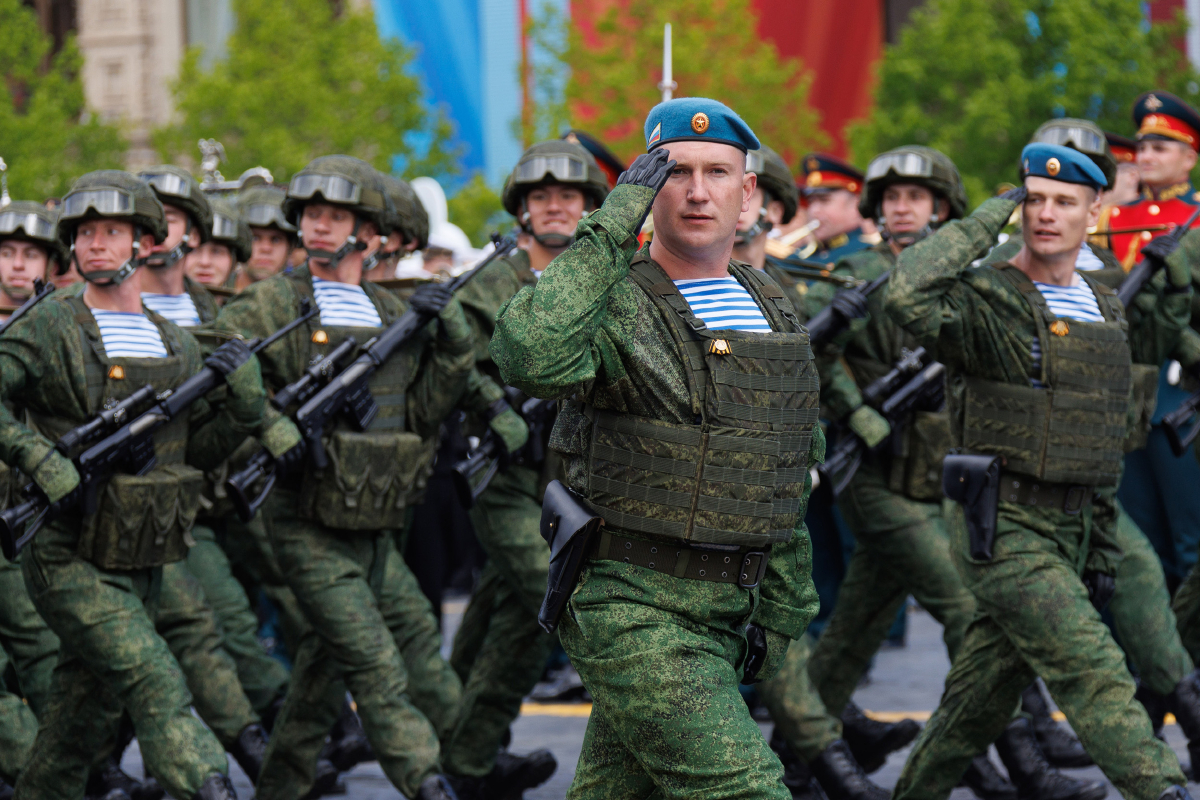
Estonia and Germany have entered around 5000 Russians and Ukrainians into a Schengen database for refusal of entry – apparently without individual examination. The lists reportedly came from the secret service in Kyiv, and more are expected to follow.
EU states repeatedly refuse entry to undesirable persons across the entire Schengen area. A prominent German case was the Palestinian-British surgeon Ghassan Abu-Sitta, who two years ago had been invited to a Palestine congress in Berlin – the order was later overturned by an administrative court because the Federal Police could not provide sufficient justification for the alleged danger posed by the doctor.
The government in Estonia has now issued 1334 Russian nationals with an entry and residence ban in the Schengen area – apparently collectively and without subjecting them to the required individual assessment. Interior Minister Igor Taro stated this in response to an enquiry from “nd”. Those affected are said to be former soldiers, many of them “with combat experience, ideological conditioning, and often a criminal background”.
Two corresponding lists, initially with 261 and subsequently 1073 names, were “compiled in cooperation with various intelligence agencies”. Ukraine also contributed to this.
Entry only after individual assessment
The lists contained personal data, numbers of military units and “other identifiers” – according to nd information also biometric data. The refusal of entry was entered into the Schengen Information System (SIS II) by the Estonian authorities “following additional analysis” by the Estonian Internal Security Service. All connected states must comply with the alert.
As justification, Taro claims that all those affected had “participated in actual military operations against Ukraine and the Ukrainian people”. This cannot be independently verified – the lists were compiled by secret services whose methods and criteria have not been disclosed. Russia’s war against Ukraine is a criminal act. Therefore, “the hundreds of thousands of Russian citizens participating in this war are complicit in that crime”, Taro told “nd”. Atrocities committed in this war of aggression must “have a price for each and every one of them”.
The entry in SIS II is made under Article 24 of the relevant regulation. However, this also stipulates how the individual examination for such an alert must be conducted: an individual assessment is required as to whether the person’s stay represents a threat. Personal circumstances of the third-country national concerned must also be taken into account.
Lithuania also enters Russians
According to Interior Minister Taro, Estonia nevertheless uses a collective justification for entries in SIS II: “They pose a real threat to the entire Schengen area and our collective security. These are individuals loyal to the Russian regime and they act as an extension of the Russian special services in the hybrid warfare waged against European values.”
At the EU Interior Ministers’ meeting in Brussels last week, Estonia’s Interior Minister promoted the idea that other states should also enter lists of Russian names into SIS II. “No one doubts the seriousness of the problem,” Taro wrote in a statement. Some countries were already planning “to take the same steps”, Lithuania was already doing so. Latvia, Finland, Poland, the Czech Republic and Romania had “voiced their support” at the meeting. Cyprus, which currently holds the presidency of the Council of the EU, now intends to convene a meeting on the initiative.
Germany lists former prisoners in SIS
The German Ministry of the Interior said it had “no such lists”, according to a spokesperson speaking to “nd”. However, Germany itself has made thousands of entries in SIS II in connection with the war in Ukraine – these concerned exclusively Ukrainian nationals. The magazine “Politico” first reported this. Those listed are reportedly exclusively former prisoners who served their sentences in Ukrainian penal institutions, for example in Donbas, before these areas fell under Russian occupation.
The names of those affected come from a list of at least 3738 former prisoners that Ukrainian authorities transmitted to the EU police agency Europol in spring 2023. This list was also apparently compiled by secret services. The government in Kyiv emphasises that the transfer was merely “for informational purposes” and that inclusion in SIS was not requested.
The Ministry of the Interior also describes the list from Ukraine as an “information notice”. However, the German Police Headquarters used it as an occasion to enter 3474 of the persons mentioned there for refusal of entry in SIS II. The ministry confirms this in its response to a parliamentary written question by Left Party MP Lea Reisner.
Entry also denied to war victims
The German government does not comment on the reasons for the measure. “Politico” nevertheless reports on the consequences of the entries: the 35-year-old Yuliia Hetman, who had served her prison sentence in occupied Mariupol, was reportedly turned back at the Polish border in September 2023 because of a German SIS entry.
More recent is the case of the 48-year-old Vasyl Soldatov: he had been forcibly deported to Russia during the war and, after his release in May 2025, discovered during an attempted border crossing that a German entry prevented him from entering to join his wife who had fled to the Czech Republic – even though Prague does not consider him a security risk.
The report by “Politico” prompted Europol to issue an otherwise rare statement. In it, the EU police agency clarifies that, for legal reasons, it cannot itself enter names into SIS. Responsibility for turning secret information from third countries into concrete entry bans lies solely with the EU member states. Because the data transmitted from Ukraine were irrelevant for cases supported by Europol, the list was also deleted in September 2023.
Legal grey area: why the IS procedure does not apply
The instrument of an SIS entry prompted by foreign secret services is not new. However, it has so far been used exclusively in the case of actual or alleged IS members from Syria or Iraq who are regarded as “foreign fighters”. In those cases Europol was responsible for receiving and conducting an initial analysis of the lists. These came, for example, from the US Federal Bureau of Investigation or from Tunisia.
Germany’s Federal Criminal Police Office has also entered persons into SIS II under this procedure. After initial confusion, EU states established a routine for such transmission to national authorities in the Europol regulation amended in 2022. However, governments did not approve a proposal by the European Commission that would also have allowed Europol itself to issue alerts in SIS II.
Legally, this procedure is limited to combating terrorism and therefore cannot be applied to Russian or Ukrainian nationals. This could explain why Taro is now calling for “new and bold solutions” – and rhetorically switching to “hybrid attacks”. Like Soviet veterans of the war in Afghanistan in the past, Russian citizens with military training could now seek “new roles in the criminal underworld”, Taro explained in Brussels.
The Left Party in the Bundestag criticises that the blanket alert concerning an entire group of persons was apparently issued without examining the individual case and proportionality. “These data have been entered into SIS in violation of Union law. They must be deleted immediately by the Federal Police,” demands Jan Köstering, who sits on the Interior Committee for the party.
Published in German in „nd“.
Image: Russian soldiers at a military parade (Mil.ru, 2024 Moscow Victory Day Parade 28, CC BY 4.0).

Leave a Reply