The EU Commission is working with the Council on a new sanctions regime against “migrant smuggling”. Who is to be listed as a “smuggler” and what protective mechanisms apply remains open.
The European External Action Service (EEAS) has, together with the EU Commission, commenced consultations on a new EU sanctions regime targeting “migrant smuggling and trafficking of human beings, and, if suitable, other forms of organised crime” in third countries. This is confirmed by the High Representative and Commission Vice-President Kaja Kallas in response to a query from The Left MEP Özlem Demirel.
Similar to existing sanctions regimes – for example against Russia in the context of the war in Ukraine, or against the smuggling of oil products from Libya – the new instrument is to act against natural persons and entities, “including, but not limited to, relevant organised crime groups”. They would be placed on a sanctions list if their actions “pose a security threat to the EU”.
Following a decision and the subsequent introduction of the new sanctions regime, the listing would follow the usual routine: both Kallas and the member states may submit proposals. The Council assesses these according to their “political feasibility and legal solidity”. If no EU country vetoes, the entry onto the list proceeds.
Kallas does not become more specific in her response. The exact scope of the proposed regulation, which according to nd information is supported by several member states, depends on the outcome of the ongoing consultations.
Kallas leaves several of Demirel’s central questions unanswered: for instance, how the Commission shapes the consultations substantively and what papers it has produced for this purpose, or what review mechanisms it considers appropriate. The Commission does, however, intend to have its proposal finalised by the end of March.
Criticism of the EU plans comes from Sea-Watch, which operates a good dozen rescue ships in the central Mediterranean together with further non-governmental organisations: as long as the EU denies safe routes for those fleeing, it itself creates the conditions under which smuggling structures arise. The planned EU sanctions regime is therefore “not a step towards greater protection, but the consistent continuation of a policy of closure that only makes flight more dangerous”.
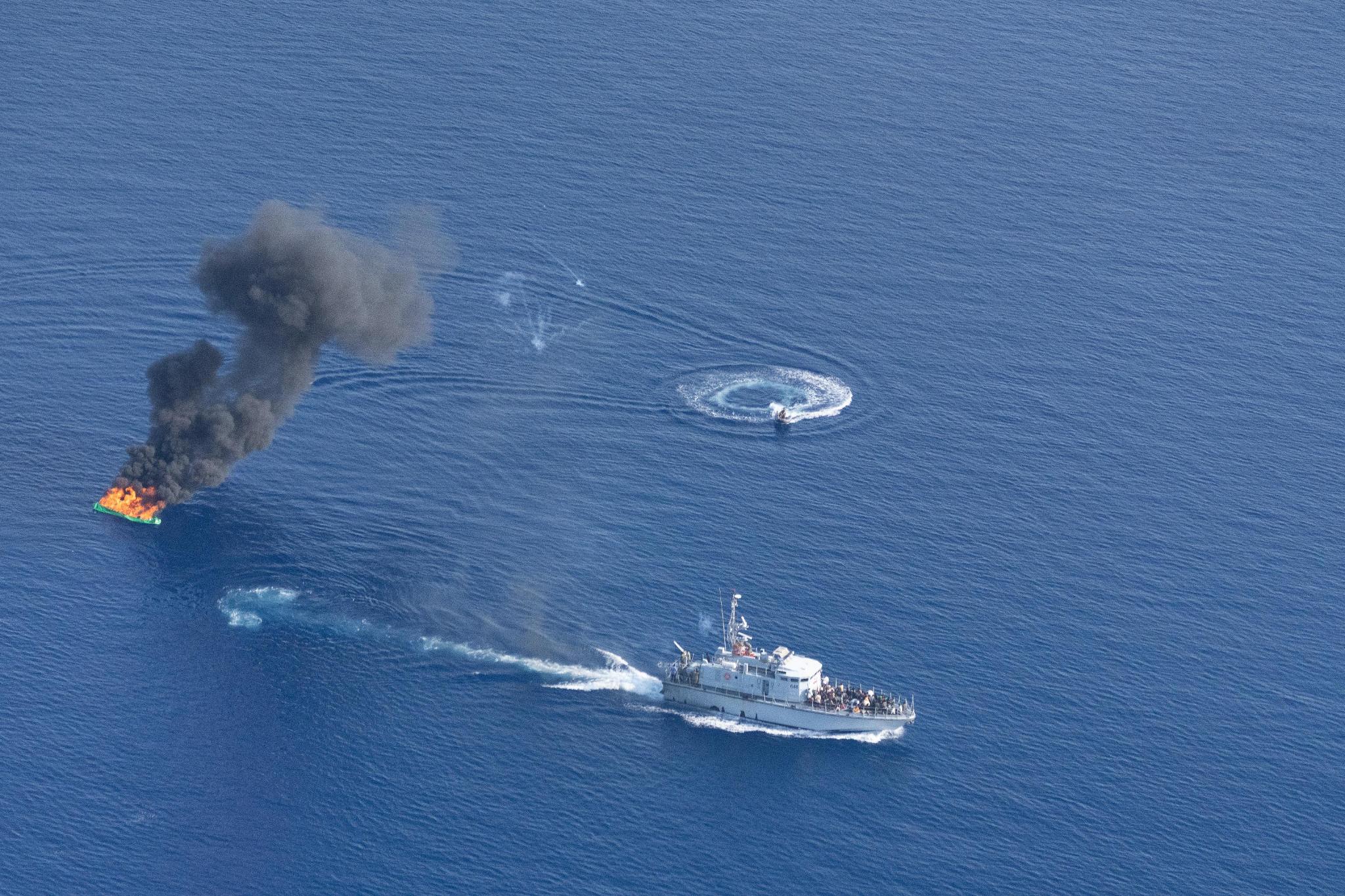
The sanctions are likely to focus, amongst other things, on Libya. It is well known there, however, that the smuggling trade is in the hands of militias that are closely intertwined with state structures. Some militias of the Libyan coast guard, for example, profit doubly: they receive support from the EU for – increasingly armed – migration deterrence and simultaneously pocket high four-figure sums in euros from those seeking protection who board boats heading for Europe.
Nevertheless, the EU intends with its military mission Irini to extend cooperation on migration deterrence to the eastern part of Libya, even though this is under the control of a breakaway counter-government in Benghazi. “Sanctioning individual actors whilst cooperating politically and financially with the same structures is simply hypocritical,” a Sea-Watch spokeswoman tells “nd”.
Published in German in „nd“.
Image: Libyan Coast Guard intercepting migrants in the Mediterranean (Joseph Oertel/ Sea-Watch).



Leave a Reply