Shortly before the large demonstration “No Kings” in Rome, officers checked the left-wing EU MEP Ilaria Salis in her hotel room in Rome and asked her questions. The police allegedly referred to an order from Germany. That would not be lawful.
Two police officers held and questioned the Member of the European Parliament Ilaria Salis in a hotel on Saturday morning for around an hour. The order for this is said to have come from Germany, Italian media report. Salis was on her way to the “No Kings” demonstration against authoritarian tendencies in global politics.
The parliamentarian Salis was in 2023 one of the accused in the so-called Budapest complex in Hungary. This concerns offences by an allegedly Germany-based “Antifa East”. After the Italian successfully ran for the left-green list in the European Parliament and obtained immunity, the Budapest court had to order her release. It is not known that Salis is also under investigation in Germany.
In a written statement, the Rome police authority said that officers had verified the identity of the MEP during the check. Once this had been established beyond doubt, the officers discontinued all measures, “without entering the hotel room”. No search was carried out.
The Italian EU MEP was approached on the instructions of “a third European state”, the police write. This was carried out on the basis of a “system of international police cooperation”. The Italian authorities had “no discretion regarding the requested measures”. What these were, however, remains unclear.
The police were alerted to Salis by a so-called Blue Notice from Interpol, writes “Il Manifesto”, which was accordingly triggered during her registration at the hotel. This type of Interpol notice is possible when an authority wants to learn the whereabouts or activities of a person. It also included an order for questioning, the newspaper writes. It is possible that the Interpol entry comes from Hungary – and has not been deleted, even though Salis now enjoys immunity.
According to other Italian reports, German authorities entered the order into the Schengen Information System – through which police forces across Europe are informed about wanted persons – at 2 March. However, this is not possible for Interpol Blue Notices. In Salis’s case, this would only be conceivable for two measures: a European Arrest Warrant or an alert for discreet or targeted checks. An order for arrest is ruled out due to Salis’s immunity – or it would be unlawful.
Checks ordered by other countries are common in a left-wing context. They are carried out on the basis of Article 36 of the Schengen Borders Code. In the case of discreet measures, those affected are not to be arrested but monitored – ideally without them noticing. If the persons come into contact with police or border controls, a report is made to the issuing police authority or a domestic intelligence service. This notification includes details of the travel route, means of transport used and accompanying persons.
If a “targeted” check is also marked in the Article 36 alert, the persons or their vehicle are searched. But the search of a home or a hotel room is not covered by this. Alerts under Article 36 may also only apply to random police checks or border crossings – home visits or the so-called “Gefährderansprachen” known in Germany are not legitimised by this.
This leaves the European Investigation Order (EIO), which has been in force since 2016, modelled on the European Arrest Warrant. Under this instrument, the authority of an issuing state can order house searches or other coercive police measures. However, these requests are not flagged in the Schengen Information System, but transmitted to the competent states via the EU Agency for Criminal Justice Cooperation.
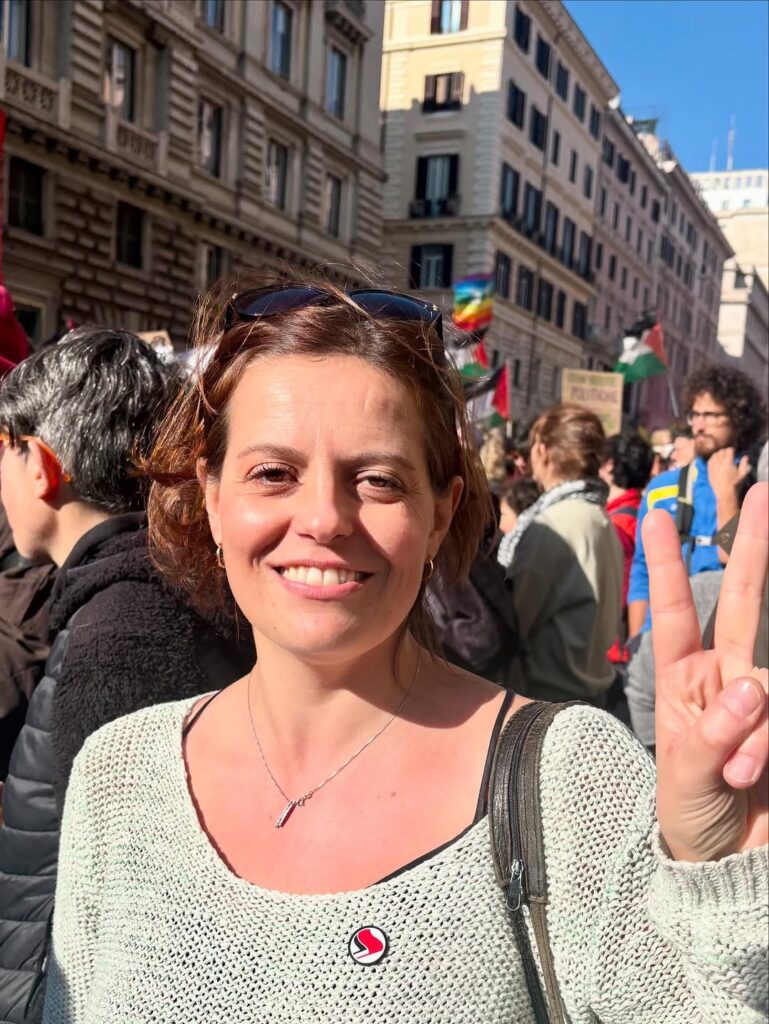
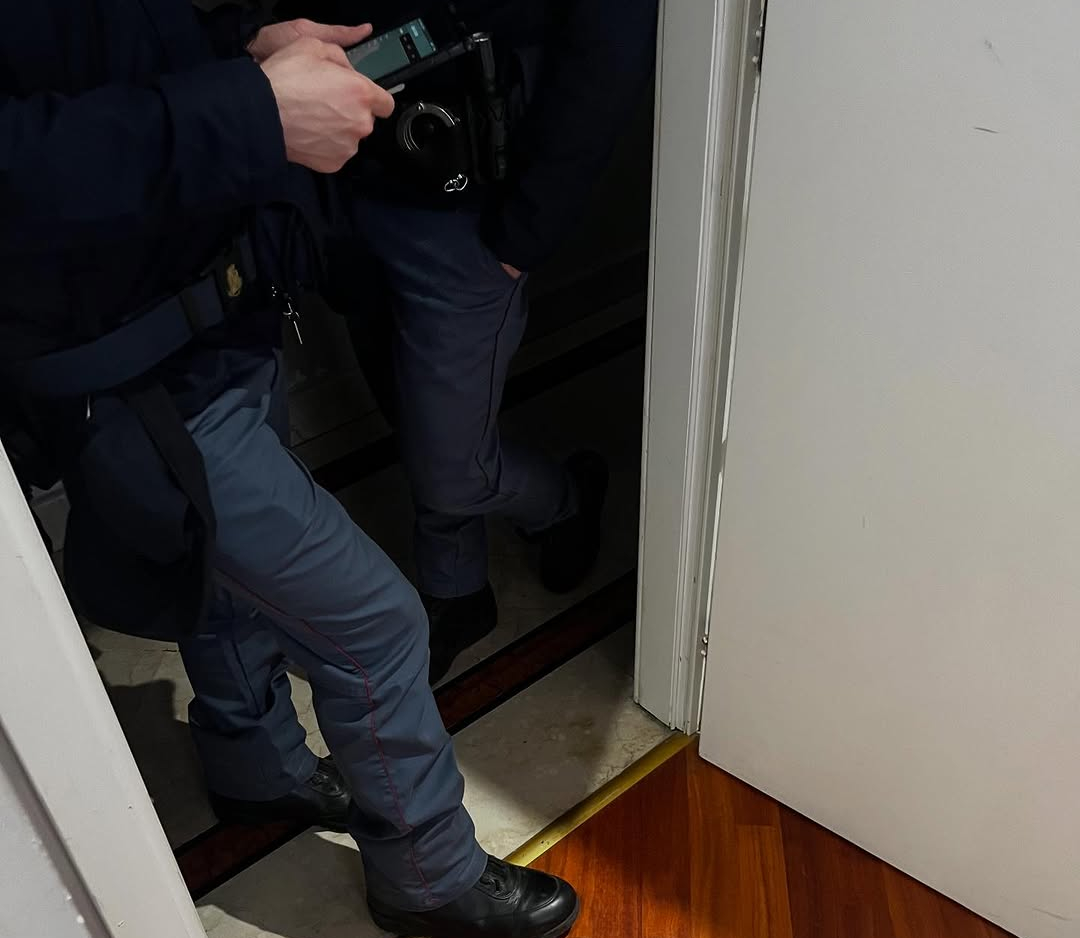
Salis later described the course of the police measure on the sidelines of the demonstration: “At around 7.30 a.m. the police woke me. They knocked on the door, said my name, explained they were the police and asked me to open. I opened, they asked for identification, which I gave them, and pointed out that I am a Member of the European Parliament. They did not explain the reason for the visit – they merely said it was checks.” The officers then asked her a series of questions: “They concerned my arrival – when and how I had come. But also questions about the demonstration: whether I intended to take part, whether I might even have dangerous objects with me.”
According to her own account, Salis only learned of the alleged German origin of the alert through press reports. “This circumstance makes the incident even more serious,” the MEP said. “It would be a foreign state questioning the mandate granted to me by 178,000 voters. This is a matter that concerns democracy in Europe as a whole.”
Her lawyer Eugenio Losco told the news agency ANSA that Salis had not been provided with any document by the police officers. He suspects that “new provisions enacted in Italy, which expand preventive police powers, may have influenced the check”. This refers to a “security decree” by the government in Rome under Giorgia Meloni from February, which significantly expands preventive police powers. It allows the police to hold persons at public events, where there is a “reasonable” suspicion of a threat to public order or security, for up to 12 hours without judicial authorisation.
Left Alliance parliamentarians Angelo Bonelli and Nicola Fratoianni visited the head of the Rome police authority on Saturday. The check on Salis violates Article 68 of the Italian Constitution, the two said afterwards. This generally restricts searches, arrests and similar measures against parliamentarians without prior consent of the respective competent chamber.
Bonelli and Fratoianni called on Interior Minister Matteo Piantedosi to explain why the government in Berlin had not intervened, even though the possibly German alert had reportedly been in the Schengen Information System since the beginning of March. Fratoianni also demanded that Foreign Minister Antonio Tajani summon the German ambassador: “We want to know what is going on here. This is a gigantic matter.” Italian and German authorities initially did not respond to press enquiries.
Published in German in „nd“.
Image: Police at the hotel in Rome (Ilaria Salis).

Leave a Reply