US authorities have passed extensive IS-related data to Germany via the FBI. The Federal Criminal Police Office is now analysing millions of records to identify suspected terrorists in Germany – with dozens of cases already leading to convictions or investigations.
The German Federal Criminal Police Office (BKA) is analysing an extensive dataset originating from the former territory controlled by the so-called Islamic State (IS). Investigators aim to trace suspected terrorists in Germany. This was reported on Wednesday by “Spiegel”, “Süddeutsche Zeitung”, NDR and WDR – however, without naming sources that in other cases are said to come from government background briefings.
The basis of the BKA investigations consists of electronic and paper documents seized by the US military and allied forces during “counter-terrorism operations” in Syria and Iraq. Through the US Federal Bureau of Investigation (FBI), parts of this material were passed on to German authorities.
According to the reports, the BKA now holds around 400 such documents, containing nearly two million individual data entries on persons. A payroll list from February 2016 to June 2017, with entries on almost 50,000 alleged IS members, is considered particularly valuable – described by the media as a “data treasure”. It reportedly includes names, dates of birth and ten-digit personnel numbers. The US Army is said to have seized the list during the battles for Mosul.
According to its own statements, the BKA has not yet even checked half of the names on the payroll list. One difficulty lies in differing spellings of names and dates of birth. This issue is also said to have contributed to the failure to prevent an attack in which a Syrian man stabbed guests in a bar in Bielefeld a year ago.
In at least six cases, alleged IS members have already been convicted in Germany on the basis of the available data, while investigations are ongoing or have been completed in around 30 further cases, according to the BKA.
For its investigations, the BKA compares names with, among other sources, the Central Register of Foreign Nationals. This has so far led to the identification of around 75 individuals believed to be in Germany. In addition, photographs from IS documents are automatically matched with images from police databases – resulting in a further approximately 100 matches, according to media reports.
Around 20,000 names of alleged or actual IS members have also been entered into the Schengen Information System (SIS) at Germany’s initiative, which is accessible to border officers in 30 countries. Several thousand former Russian soldiers have also been entered into the SIS with entry bans by countries such as Lithuania, with tens of thousands more expected to follow.
The German Federal Police has additionally stored 3,500 Ukrainian nationals as undesirable persons in the database. Under the Schengen Borders Code, each SIS entry is actually subject to an individual case assessment. It remains unclear how this requirement was applied in the case of the 20,000 suspected IS members.
Published in German in „nd“.
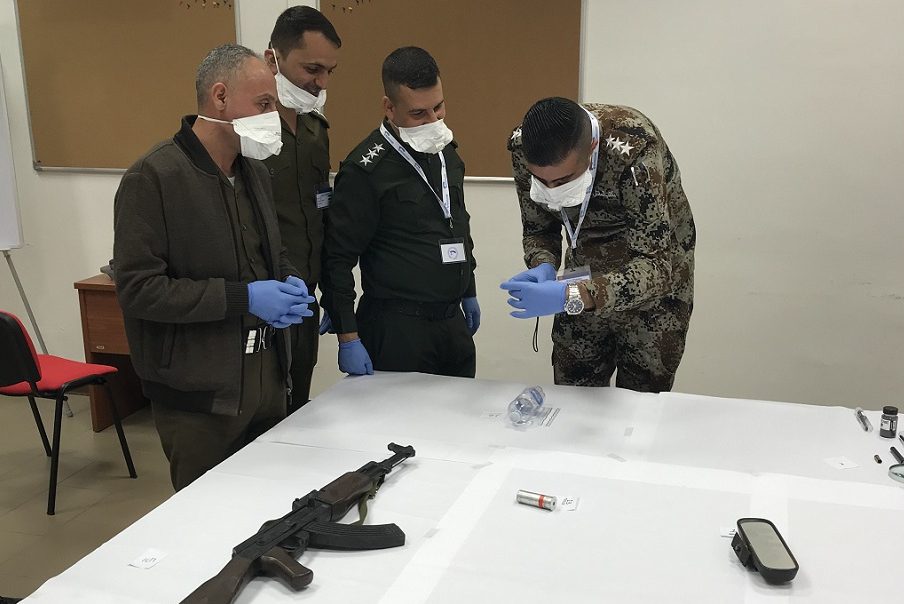
Image: Italian training for Iraqi authorities to obtain information at a crime scene (Interpol).


Leave a Reply