A new UN report from Libya describes arbitrary detention, abduction, sexual violence against women, men and children, and the forcible interception of boats in the Mediterranean. The EU Commission appears largely indifferent.
The United Nations office in Libya published a report in February describing torture, rape and enslavement of migrants, asylum seekers and refugees in the country. Covering the period from January 2024 to November 2025, “Business as usual” documents, among other things, arbitrary detention, abduction, sexual violence against women, men and children, and the forcible interception of boats in the Mediterranean by the Libyan Coast Guard.
The report also names the EU border agency Frontex, which has repeatedly transmitted the coordinates of migrant boats to the Libyan Coast Guard, “facilitating interceptions and returns to Libya, where those returned are routinely subjected to arbitrary detention and other human rights violations.”
The UN is therefore calling for an immediate moratorium on all interception operations and returns to Libya, the suspension of EU assistance to Libyan militias, and the disclosure of all reports by the EU and its member states concerning these crimes.
Libya encouraged to commit abuses
Last week, the European Commission responded to a parliamentary question on this subject from Left Party MEP Özlem Demirel. Demirel had asked how the EU monitors compliance with human rights in its border and migration projects in Libya – including the Italy-led Support to Integrated Border and Migration Management programme (SIBMMIL). This comes against the backdrop of persistent reports of serious abuses by the very Libyan units that the EU trains and funds, including the Libyan Coast Guard, land border forces, and the migration control authority DCIM.
The Commission stated that it has “several complementary mechanisms” for monitoring human rights compliance. These include regular reporting by private implementing partners, on-site security assessments, and a “third-party implemented monitoring framework” in place since 2019. This framework provides EU staff with regular assessments of the operational environment, “identifying risks, opportunities and potential human rights impacts.”
However, the findings of these reviews are to remain entirely confidential. For years, members of both national parliaments and the European Parliament have called for their disclosure. This is because the EU-funded migration deterrence measures are clearly encouraging Libya to treat violations of fundamental and human rights as something close to routine – as the UN report once again confirms.
“EU’s reputation damaged”
As far back as 2022, the Commission responded to a similar question by stating that it must “ensure that Libyan authorities use delivered equipment only in line with the objectives of our border management programmes.”
According to an internal document on SIBMMIL, the Commission is aware of the opposite being true. The document states verbatim that, should the treatment of migrants during rescue and interception operations not improve, this would “further damage the narrative and reputation of the EU.” To “positively influence” that reputation, the EU is also meant to work with civil society organisations – though nothing of the sort has become publicly known to date.
“Do no harm principle”
Within the framework of measures funded through the EU Emergency Trust Fund for Africa (EUTF) in Libya, a monitoring mechanism also exists in which “particular attention is paid to compliance with the do no harm principle.” Implementing partners are contractually required to establish a “permanent internal technical and financial monitoring system for the measure” and to submit regular progress and final reports.
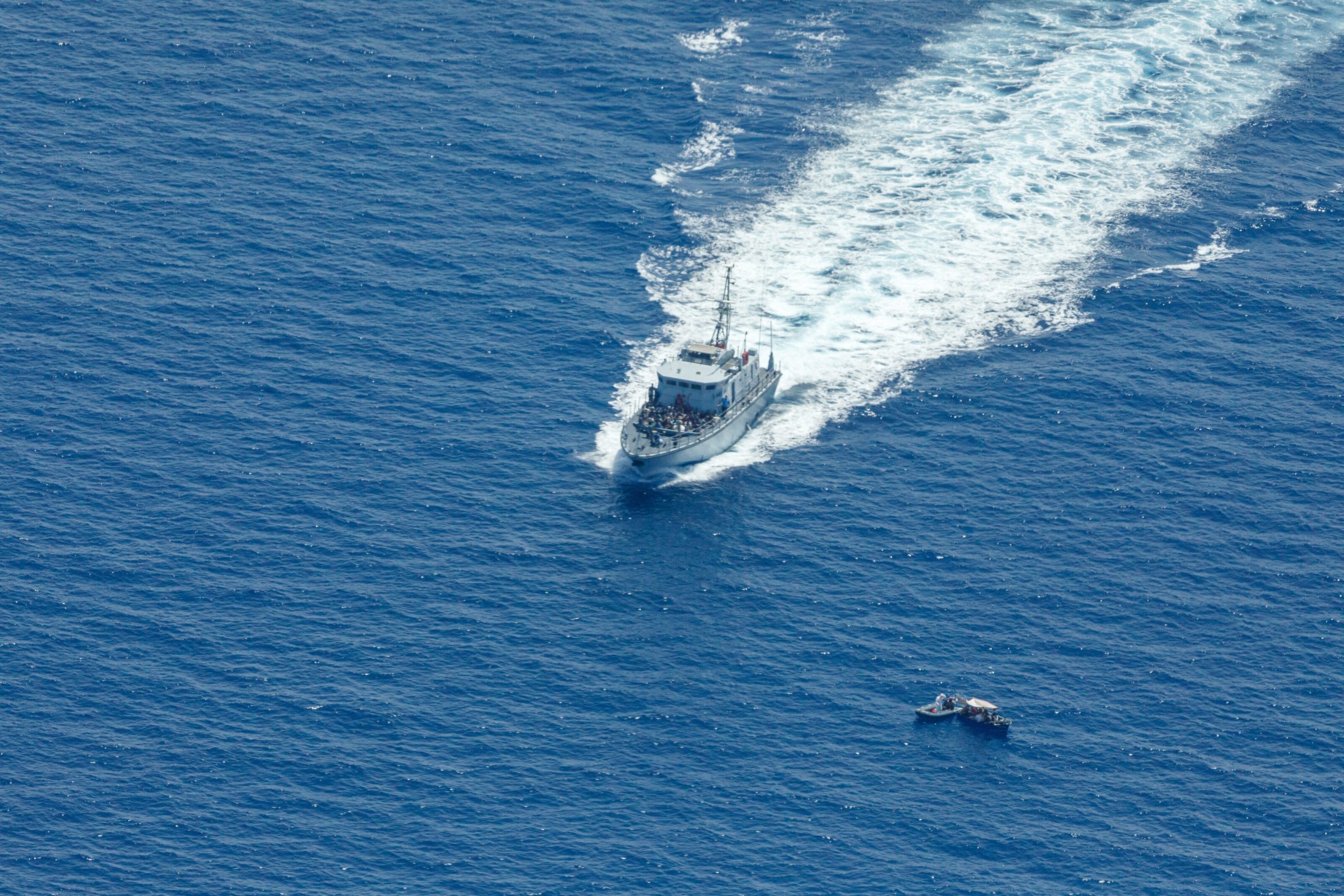
These monitoring commitments have nonetheless failed to prevent further abuses. Last summer, for instance, the rescue vessel “Ocean Viking” was once again fired upon in the Mediterranean by the Libyan Coast Guard – using vessels and equipment funded by the EU.
“For the Commission, secrecy is a matter of security – but not the security of people being tortured and enslaved in Libyan detention centres,” said a spokesperson for the rescue NGO Sea-Watch. “The survivors we rescue are living proof of what the Commission does not want made public.”
Severe consequences for migrants
The Commission justifies its refusal to disclose reports on potential crimes by Libyan militias on the grounds of their “sensitive nature,” citing an alleged threat to public security. It further argues that disclosure of the contents could “jeopardise international relations” – a reference, presumably, to Libya, whose two rival governments might feel threatened by the reports.
This culture of secrecy stands in direct contradiction to the findings of the UN report, which states verbatim: “The absence of human rights due diligence has had severe adverse consequences for migrants, asylum seekers and refugees.” Sea-Watch is equally critical: “When the EU Commission cites international relations as the reason for keeping reports on militia crimes secret, that says everything about whose relationships are actually being maintained here.” The EU, it argues, thereby becomes complicit in the gravest human rights violations.
Image: David Lohmueller / Sea-Watch.