
The EU border agency only passes on limited information about refugee boats in distress at sea to ships in the vicinity, so that the people are picked up by Libya’s coast guard. This is indicated by data from Sea-Watch.
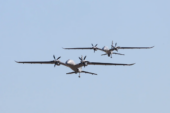
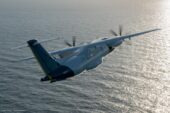
The EU border agency Frontex stations the surveillance aircraft “Eagle 1” on Lampedusa as well as a large drone on Malta to track down migrants in the Central Mediterranean. When a boat on its way to Europe is discovered, Frontex informs the Maritime Rescue Coordination Centres (MRCC) of the coastal states – as a rule these are Italy, Malta, Tunisia and, since 2018, Libya.
If the pilots of Frontex aerial surveillance assess a boat as unseaworthy, they also issue an emergency call via the usual radio channel 16. This “Mayday relay” can be received by all ships in the vicinity. Their captains are obliged to provide assistance under international maritime law.
The civilian rescue fleet, which operates with ships and aircraft in the Mediterranean, also stands ready for such emergency calls. This is because the non-governmental organisations are excluded from the distribution channels of the authorities. Sometimes, however, Frontex withholds essential information in the Mayday calls, making it difficult for the rescue fleet to find the boats.
Research by “nd” and the German NGO Sea-Watch proves that in several cases only a description of the boat, the estimated number of occupants and position data are transmitted. Information on Course over Ground (COG) and Speed over Ground (SOG) is missing in these radio messages via emergency channel 16. However, the important information is probably transmitted to the Libyan coast guard – presumably so that they can reach the boat occupants first and retrieve them.
In response to a parliamentary question from the left-wing MEP Özlem Demirel, Frontex states that a Mayday call always contains “all relevant and available information, including course and speed of the boa”. The latter would only not be transmitted if they could not be determined with sufficient reliability or if the situation did not meet the criteria for an emergency.
“nd” has contradictory reports on two examples. On 5 July 2025, for instance, a drone operated by Frontex flew over a boat with around 40 people in distress at sea, to which a Mayday relay was sent at the same time – presumably by the Bremen-based company Airbus, whose personnel operates the drones from Israel for Frontex. However, this anonymous emergency call was sent without stating the course and speed. A second such maritime emergency concerns 12 July 2025 with around 75 people. On both occasions, a Sea-Watch aircraft explicitly asked on channel 16 for the COG and SOG of the boats – in vain.
On 12 July, the rescue ship “Ocean Viking” had set off for the coordinates of the maritime emergency, on 5 July the “Solidaire”. In both cases, however, the Libyan coast guard reached those in distress first and took them against their will back to Libya.
The practice of informing the Libyan coast guard so that they stop migrants is controversial. It is referred to as a “pullback” or “pushback by proxy” and means prohibited rejections by state authorities, which occur either directly or with the help of the coast guard from Libya. According to the so-called Hirsi ruling by the European Court of Human Rights from 2012, EU states and Frontex may not carry out pushbacks to Libya, as the country is not considered a “safe haven”.
Italy and the EU Commission therefore built up a previously non-existent MRCC in Libya from 2017 onwards, which can be contacted by European coast guards. Frontex provides aerial surveillance for this international law loophole – the EU is currently also extending this system to eastern Libya.
Frontex formulates the interaction between maritime coordination centres in EU states and the coast guard in Libya, which is notorious for human rights violations, in its response to the Left MEP Demirel as follows: passing on information only to the state coordination centres, including those in Libya, “prevents confusion, duplication, or unsafe responses”.
What is presumably meant are cases in which civilian rescue ships have followed an emergency call in addition to the Libyan coast guard. The units from Libya, which mostly consist of militias, also issue instructions to the ships of the civilian fleet to leave the area. Violence is regularly threatened or used, and shots are even fired at rescuers or at migrants. The “Justice Fleet” campaign, in which almost all civilian rescue ships in the Mediterranean have joined forces, documents many dozens of such incidents for 2025 – these always originated from the Libyan units.
On the high seas in the Mediterranean, however, Libya and other coastal states have no authority whatsoever – certainly not to prevent a sea rescue. Italy’s authorities have repeatedly imposed ship blockades and fines on NGOs because their captains disregarded orders from the Libyan militias. In lawsuits against this, however, Italian courts have overturned all these measures.
“Navigational parameters such as direction of travel and estimated speed are essential information for calculating the expected position of a boat and for coordinating search and rescue measures in a targeted manner”, commented a Sea-Watch spokesperson to “nd”. “Their absence enlarges the search area, delays the deployment of rescue units and thereby directly increases the risk for people in distress at sea.”
“Under international maritime search and rescue protocols, the speed (SOG) and course (COG) of a distressed vessel are not part of the standard information required in a Mayday relay transmission”, Frontex says in response to the accusations. The procedures of the two incidents from July 2025 cannot be further verified by Frontex, as it does not make audio recordings of its radio communication or create transcripts. The border agency also points out that a Mayday call is “reserved strictly for situations of immediate danger”. Therefore “its misuse or repeating such a call outside its proper context, even after an operation, can cause confusion for rescue authorities or other vessels monitoring distress channels, potentially diverting resources or delaying real emergencies”.
“It is remarkable with what cold-bloodedness and hypocrisy the EU on the one hand claims to be saving lives in the Mediterranean, but on the other hand research and enquiries show exactly that the opposite is being done”, says MEP Özlem Demirel. It is known that the “so-called Libyan coast guard” commits the most serious human rights violations in order to keep refugees away from the EU. “Now it comes on top of that that Frontex, through the one-sided passing on of data to Libya, is directly involved in the atrocities and the death of refugees.”
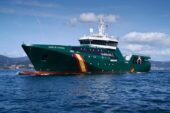
How many people were endangered or even drowned due to the non-transmission of the data cannot be determined. However, it is known that the Libyan coast guard has received more and more ships and speedboats from the EU in recent years and is carrying out pullbacks more and more frequently following information from Frontex or from Europe’s coast guards.
According to information from “nd”, around half of all boat occupants on their way to Europe were intercepted by Libyan militias last year. Only around one tenth of the people were rescued by the civilian fleet and taken to safe harbours in Italy.
Published in German in „nd“.
Image: The people on board of the boat spotted by Frontex on 12 July 2025 were returned to Libya against their will (Chiara Bellamoli/Sea-Watch).
Leave a Reply