Frontex is expanding its presence along the French coast as crossings of the English Channel remain high. At the same time, the agency is under renewed scrutiny over an incident near the Greek island of Ikaria in which 27 people were reportedly returned to Turkish waters.
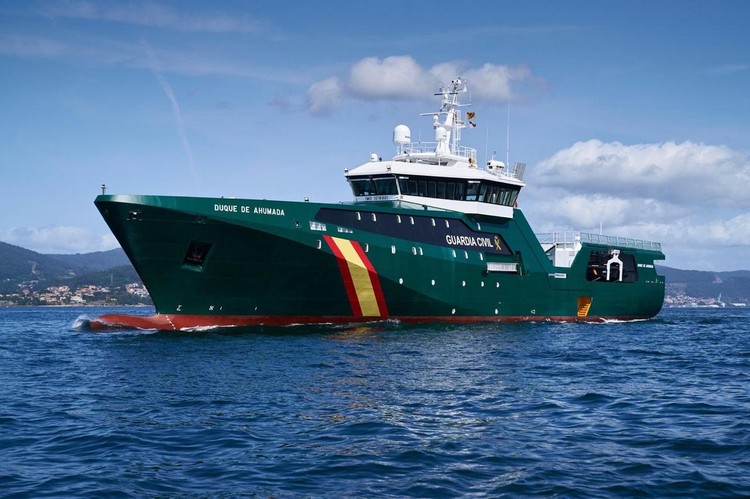
For years, an aircraft operated by the EU border agency Frontex has been monitoring the English Channel, looking for people travelling in boats towards the United Kingdom to seek asylum there. Last week, Frontex also deployed a patrol boat in the Channel for the first time. The “Duque de Ahumada” of the Spanish Guardia Civil is officially intended to support French search and rescue operations.
The ship can take up to 100 people on board. Frontex and the French prefecture, however, stress that the deployment of the “Duque de Ahumada” is limited to surveillance and situational awareness. Intercepting the boats is the responsibility of the French authorities – provided the people are still detected in French waters.
Departures spread over longer distances
The deployment comes against the backdrop of persistently high numbers of people crossing the English Channel in increasingly large inflatable boats. Departure points are spread along an ever longer stretch of coastline, resulting in riskier crossings to the British coast, but also making detection more difficult.
The deployment of the “Duque de Ahumada” is scheduled to run until January 2027 and may then be extended. At the end of September, the Spanish vessel is due to be replaced by the “Río Segura”, also operated by the Guardia Civil; from November, Lithuanian units will take over. The crews work with a Frontex surveillance aircraft that has been flying over the English Channel since December 2021. It is also intended to help identify and prevent “illegal” border crossings.
Also last week, Frontex sent five off-road vehicles “loaded with modern surveillance and night-vision equipment” to the French coast. They travelled in a convoy from Frontex headquarters in Warsaw in a highly publicised operation and are intended to monitor the coast between Dunkirk and Coquelles around the clock.
“Action plan” for “operational support”
The current expansion of border surveillance involving Frontex stems from a working arrangement concluded between Frontex and the United Kingdom in February 2024. This covers information sharing, joint training and more operational cooperation without executive powers for Frontex personnel. In June 2026, the European Commission additionally presented an “action plan” for increased “operational support” in the English Channel and the North Sea. In it, the EU announced the deployment of additional Frontex maritime and aerial surveillance assets.
The French prefecture describes the deployment as a commitment to the safety of all people at the EU’s external borders. Frontex, however, has repeatedly been accused of involvement in human rights violations, including illegal pushbacks in the Mediterranean. The Paris Court of Appeal is investigating former Frontex director Fabrice Leggeri, who was forced to resign in April 2022, on suspicion of involvement in crimes against humanity. Leggeri now sits in the European Parliament for the far-right Rassemblement National.
Another Pushback to Turkey
The current Frontex director, Hans Leijtens, who took over the post in 2023, has also come under criticism for this reason: the border agency tolerates documented pushbacks from Greece – or even supports them. A new case was made public by the Norwegian organisation Aegean Boat Report on Wednesday: on 4 September, 27 people found themselves in distress off the Greek island of Ikaria in a disabled boat that was filling with water and called the European emergency number 112.
Shortly afterwards, a Greek coastguard vessel bearing the identifier “LS 060” approached their boat. Video footage filmed by the group shows several people on the vessel, including two masked individuals and one person wearing military-style clothing. Aegean Boat Report subsequently lost contact with those on board. Hours later, the Turkish Coast Guard reported that it had picked up 27 people from a life raft off Menderes near İzmir, who had previously been pushed back into Turkish waters by Greek forces.
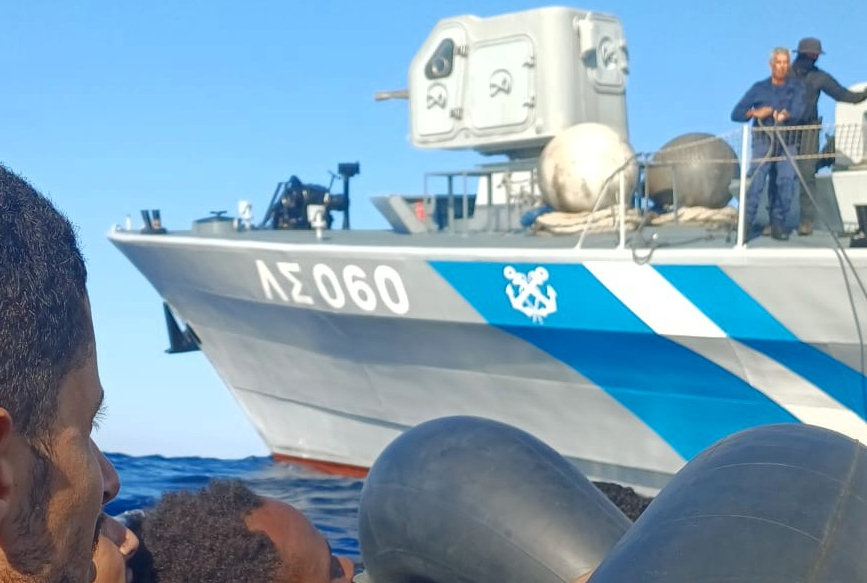
Aegean Boat Report reports that the same vessel number had already appeared in documented allegations of pushbacks in 2015, 2020 and 2021. In one case in 2020, research by Bellingcat also found that a Romanian Frontex vessel had been involved. Aegean Boat Report has forwarded the latest case to Frontex and called on the border agency to clarify how it was connected to the EU’s “Poseidon” operation in Greece.
Published in German in „nd“.
Image: The Spanish vessel “Duque de Ahumada” can take up to 100 people on board, but is primarily intended to support the French authorities with surveillance and situational awareness (Frontex).
Leave a Reply