
The EU Commission wants to triple Frontex troops. The agency’s appetite for data is also growing. This year, the Commission intends to propose further changes – some details have already leaked.
Operations of the European border agency are hardly comparable to those of the brutal immigration authority ICE in the United States – even though this equation currently has supporters on social media. This is particularly so as Frontex’s annual budget has now risen to one billion euros, whereas ICE received thirty times as much last year.
Moreover, Frontex is only deployed by invitation. Its units are granted sovereign powers by police or gendarmerie forces and are also permitted to use force or weapons. However, in the host country they operate under the supervision of local personnel, who are also usually responsible for legal violations such as humiliations, excessive force or pushbacks of migrants. The EU border agency nevertheless sustains this system by passing on information or even people to national border troops.
Since 2016, Frontex has been allowed to procure its own equipment; initially these were charter contracts for aircraft and large drones for aerial reconnaissance at the EU’s external sea borders. An amendment in 2019 to the Frontex regulation also permits the creation of its own “Standing Corps” of 10,000 officers, one third of whom are trained, armed and commanded directly by Frontex.
Frontex is also receiving a new headquarters as well as a training centre in Warsaw. Also new is the establishment of a “Quick Reaction Force”, which can be deployed in response to “hybrid threat situations”. The term refers to mass attempts to overcome the EU’s external borders. However, the “Quick Reaction Force” is also intended for foreseeable situations such as football tournaments or summit meetings at borders.
Also since 2019, Frontex has been permitted to send its units to non-EU countries. So far these are Albania, Macedonia, Montenegro, Serbia, Bosnia and Herzegovina and, as the latest, Moldova. African states are at the very top of the wish list for out-of-area deployments of Frontex, but no government has yet agreed to this.
Commission President Ursula von der Leyen wants to increase the “Standing Corps” to 30,000 officers. “Germany must provide maximum support here,” declared German Interior Minister Alexander Dobrindt in response to a favourable question from a member of his Union party in the Bundestag. German personnel already account for more than ten per cent of Frontex troops.
This year, the EU Commission also intends to propose a new regulation for Frontex, which will then be discussed by the 27 EU states and Parliament. Initial contents have already leaked. The agency is to build up capabilities for drone defence – these could also be deployed in countries such as Ukraine, which wants to conclude an agreement on the stationing of Frontex. In addition, Frontex will be responsible for the IT-supported risk analysis of visa-free travellers, who from 2026 onwards – modelled on a US system – will have to register their border crossing. Additional tasks include implementing the reform of the “Common European Asylum System”, under which the agency is to subject arriving asylum seekers to a new routine of checks.
A rapid expansion of the young “return centre” at Frontex headquarters is also planned, which is headed by a senior German federal police officer. The centre is expected to increase its currently still low numbers of collective deportations or “voluntary returns”, which stood at around 63,000 last year. Under the new regulation, these operations are also to be permitted from states outside the EU. In this way, Frontex could relieve the EU of migrants attempting to immigrate via Balkan states. This includes transfer to “return hubs”, which may be established in African countries. With this “forward-looking” migration deterrence, the EU border agency does in fact come ever closer to the US-American ICE.
Meanwhile, the supervision and control of Frontex are not set to grow accordingly. Operational decisions can be taken solely by Frontex Director Hans Leijtens or his three deputies – and this is to remain the case. Frontex rejects the establishment of an external, possibly even independent evaluation.
Published in German in „nd“.
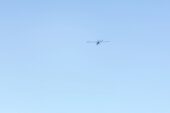
Image: Frontex conducts research and invests in surveillance with drones as well as in their defence. These capabilities could soon be deployed in Ukraine (Frontex/ X).


Leave a Reply