Since November, Frontex is for the first time conducting flights to counter migration from an African state. However, the mission began without an agreement on data sharing.
In November, the EU border agency Frontex expanded its aerial surveillance to the waters off West Africa. Since then, regular operations have repeatedly been conducted from the island of Santiago in Cape Verde, with the aircraft operating on behalf of the EU stationed in the capital, Praia. It is Frontex’s first such mission in an African country.
Authorities from Portugal were also involved in discussions on the technical implementation – the two countries have worked closely together on maritime security since Cape Verde’s independence. According to a Frontex spokesperson, the EU border agency also coordinates the flights with Spanish authorities. The Canary Islands, which belong to Spain, are often the destination of crossings by boats carrying migrants who depart from Gambia, Guinea-Bissau, Senegal or Mauritania towards Europe. They are a focus of Frontex’s operations.
Highly equipped surveillance aircraft
However, the new Frontex mission is starting without a new working agreement with Cape Verde. As emerges from a recent reply to a parliamentary question, Frontex therefore refers to the current operation as “Phase 1”. During this period, there is no extended exchange of surveillance data with Cape Verdean authorities – this is only to take place after the signing of a corresponding agreement in “Phase 2”.
Even without a data-sharing agreement, information on sighted boats can nevertheless be passed on to the Cape Verdean coastguard during “Phase 1” – at least in the event of distress at sea. According to Frontex, this can be done under international maritime law, which requires the notification of maritime coordination centres in neighbouring states as part of search and rescue operations.
Cape Verde designates “Eurosur coordination centre”
Following the (as yet unscheduled) signing of a working agreement with Cape Verde, “Phase 2” is then due to begin. Information exchange on boats heading for the Canary Islands would then take place via a naval situation centre designated by Cape Verde for this purpose. Frontex refers to this COSMAR as an “Eurosur coordination centre”. Eurosur is the surveillance network to which all Schengen states have been connected with the Frontex headquarters in Warsaw since 2014. Videos recorded by aircraft are also streamed there in real time.
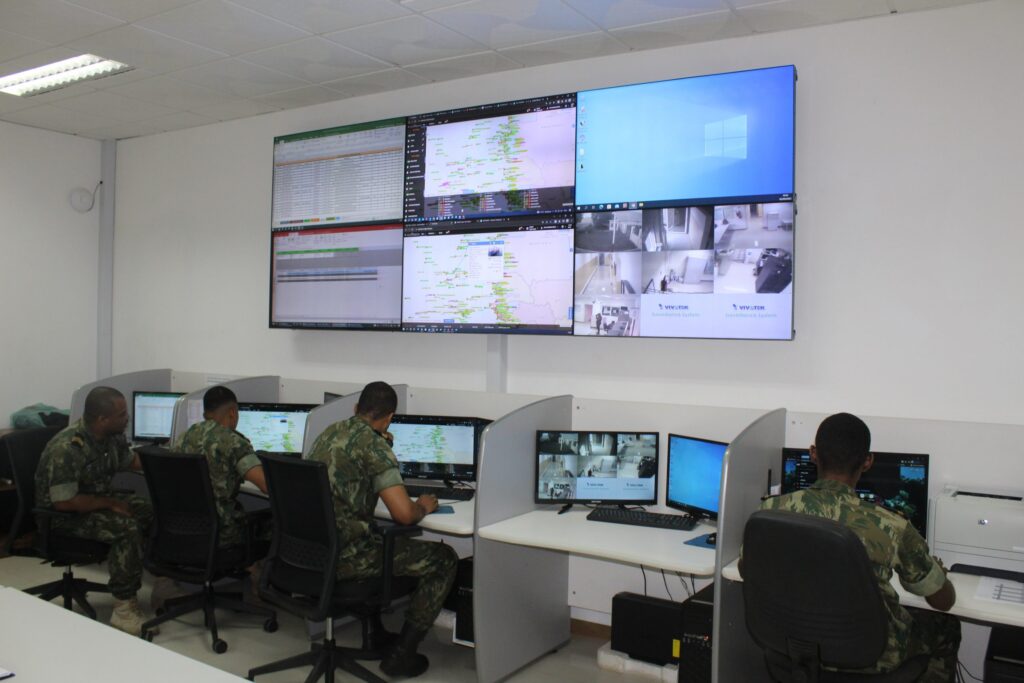
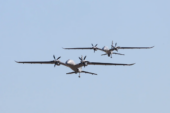
The reply to the parliamentary question also provides information on the sensor technology on board the aircraft chartered under a framework contract from the British company DEA. This includes a gyro-stabilised electro-optical and infrared camera with thermal imaging and daylight zoom camera, as well as an AIS transponder for ship identification and a maritime surveillance radar.
Such equipment is considered dual-use technology, which can also be used for military purposes. Civil search and rescue vessels are therefore not permitted to acquire or operate it; otherwise they may also face prosecution for espionage.
“Operational liaison officers” in Warsaw
Through the connection to Eurosur, the “embedded Cape Verdean authorities” receive the same information as Portugal and Spain, according to Frontex. To this end, the government will also station “operational liaison officers” in Warsaw during “Phase 2”. Conversely, Frontex does not intend to station its own personnel in Cape Verde.
The Frontex mission from Cape Verde is intended to close a gap left by failed negotiations with Senegal and Mauritania: the EU border agency originally wanted to conclude status agreements with these countries in order to be able to operate there as well. Despite prior positive signals, however, the governments refused to enter into corresponding talks.
Flights from Praia therefore take place outside the twelve-nautical-mile zone of Senegal and Mauritania and thus in international waters. This is also shown by an ADS-B tracker for the aircraft.
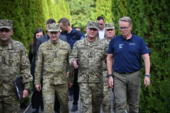
Image: Frontex delegation in Cape Verde (Frontex/ Facebook).