Frontex has agreed with Cape Verdean authorities to station aircraft to detect boats heading for the Canary Islands. Agreements with other governments in West Africa had failed.
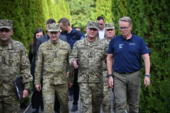
The EU border agency Frontex announced on Friday that it will in future station aircraft for aerial surveillance in the Atlantic on Cape Verde. For the start of the mission, Frontex Director Hans Leijtens travelled to the island nation’s capital Praia this week, where he met with the state minister, the ministers of defence and interior and other senior government officials.
The agreement, negotiated for months, aims to improve EU migration control in West Africa. The aircraft, chartered from private companies and equipped with surveillance technology, will monitor the search and rescue regions of Senegal, Mauritania and Gambia for boats carrying refugees heading towards the Canary Islands, a Spanish territory. When sightings occur, crews hired by Frontex inform the responsible authorities in West Africa, who are expected to intercept people and bring them back. Frontex has been practising a comparable pullback mechanism with Libya’s coast guard since 2017.
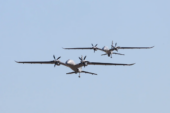
The flights from Praia are carried out, according to information obtained by “nd”, with a twin-engine Beechcraft aircraft bearing the registration 2-WKTJ, which is registered to the British company DEA – the same firm that also flies for Frontex’s pullback regime with Libya.
Agreement with Senegal and Mauritania failed
It is the first such Frontex deployment in an African country. Cape Verde’s National Police, Coast Guard, the Ministry of Foreign Affairs and the Ministry of Defence took part in the talks on the technical implementation. Authorities from Portugal were also involved; the two states have cooperated closely on maritime security since Cape Verde gained independence. The agency also planned consultations with Spanish authorities, a Frontex spokesperson told “nd”.
The Cape Verde mission fills a gap left by failed negotiations with Senegal and Mauritania. Frontex had originally sought status agreements with both countries to allow the agency to station personnel or equipment in their territorial waters or on land. Despite earlier positive signals, both governments refused to enter into such talks. Flights from Praia will therefore take place in international waters outside the twelve-mile zones of Senegal, Mauritania and Gambia.
Operations could also occur in Cape Verdean waters, as migrant boats repeatedly drift into the country’s maritime zone due to failed crossings or lack of fuel. According to Frontex, Cape Verdean authorities have also registered cases in which people travelled from Senegal to the islands on sailboats or yachts and then continued their journey to Europe.
Frontex also intends to expand its “network of liaison officers” in third countries to include the region. The network currently consists of six offices in Ankara, Belgrade, Tirana, Moldova, Islamabad and Dakar, with another planned in Morocco. The future “Rabat cluster” is expected to support aerial surveillance flights from Cape Verde.
Dissent over legal basis
Frontex intends to base its aerial operations in Cape Verde on a working arrangement from 2011, although this agreement covers only strategic cooperation, not the stationing of Frontex assets. As “nd” learned, the agency had negotiated with the government in Praia about renewing the arrangement, which was originally planned for completion in 2025. This renewal apparently did not materialise.
Frontex appears to take the position that no renewal is required for deploying aircraft or drones from Cape Verde. “Any such activities would be carried out together with our Cabo Verdean partners under the existing Working Arrangement signed in 2011, which forms the basis for our cooperation,” a spokesperson told “nd”.
As in Libya, Frontex will not station its own personnel on Cape Verde. The reconnaissance services will again be contracted from private firms. Videos they record at sea are streamed in real time to Frontex headquarters in Warsaw.
Frontex fundamental rights officer is critical
The Frontex Fundamental Rights Officer, Jonas Grimheden, has examined the plans and expressed concerns. In May, he issued an opinion on Frontex’ “Multipurpose Aerial Aurveillance” (MAS) on the West African route. According to information seen by “nd”, it explicitly concerned operations in the search and rescue regions of Cape Verde, Senegal and Mauritania, located in international waters outside the twelve-mile zones.
The aircraft or drones commissioned by Frontex are to pass information on detected migrant boats to the search and rescue authorities of the relevant states. There are, however, reports of shortcomings in human rights protection in Mauritania and Senegal. Effective safeguards therefore need to be in place before the service begins, Grimheden believes, according to an internal communication viewed by “nd”. His office had called for an action plan addressing these issues, emphasising in particular the principle of non-refoulement.
Grimheden did not want to comment publicly on his assessment: “Thanks for your interest in my views on this. This is related to an ongoing process, so I prefer not to comment on that externally,” he wrote last week to “nd”.
Drastic increase and decrease on Atlantic route
From 2020, numbers on the West Atlantic route increased sharply, according to Pro Asyl: from under 3,000 people in 2019 to more than 23,000 in 2020, over 40,000 in 2023 and 46,000 in 2024. Explanations include conditions in countries of origin – such as Senegal, where international fleets deplete fishing grounds and political conflicts persist – as well as intensified migration control on other African routes.
Spain, as the nearest neighbouring state, also cooperates closely with countries in the region on migration control. According to Interior Minister Fernando Grande-Marlaska, strengthened cooperation with Senegal has reduced arrivals from its coast by more than 90 percent this year. Spain has 40 officers stationed in Senegal who patrol with the Gendarmerie and National Police on land, at sea and on rivers, supported by vessels, a helicopter and surveillance aircraft.
The EU is investing heavily in maritime migration control in West Africa. Mauritania received €20 million this year for two new naval vessels for patrols between the country and the Canary Islands. In 2024, the EU had already paid €15 million to combat “illegal activities at sea”. Mauritania has set up two reception centres for intercepted migrants from land an sea routes with Spanish funds and the EU Emergency Trust Fund. According to a source involved in their establishment, they are “obviously detention centres”. People intercepted with the help of Frontex aerial surveillance from Cape Verde would likely end up there as well.
Published in German in „nd“.
Image: Frontex delegation in Cape Verde. The planned cooperation is intended to enable flights off Senegal, Mauritania and Gambia.