
The EU plans to triple Frontex’s Standing Corps to 30,000, decentralise commands into seven regions, deploy to six third countries plus Ukraine, operate “return centres” to boost deportations, and build a new headquarter in Warsaw
In 2004, the then EU member states founded Frontex as a joint agency for border and coast guard. Since then, it has coordinated the implementation of the so-called Schengen acquis and the associated requirements for controlling all external borders of the Schengen Area. This includes Norway, Liechtenstein, Switzerland and Iceland. These countries also contribute to the overall Frontex budget. In 2025, the border agency’s annual budget exceeded €1 billion for the first time.
In 2016, a new regulation gave Frontex the authority to procure its own equipment – initially charter contracts for aircraft and later large drones for aerial surveillance at the EU’s maritime external borders, followed by all-terrain vehicles and mobile surveillance equipment. In 2019, another new regulation allowed Frontex to build a “Standing Corps”. This force is intended to grow to 10,000 personnel by 2027 and consists of four categories: 3,000 officers form a permanent Frontex staff, uniformed and armed from the Warsaw headquarters.
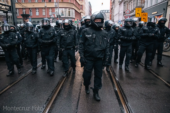
Frontex also continues to have contingents of long-term and short-term seconded officers from EU member states. A “Rapid Reserve” pool was intended to cover “unexpected needs” until the final recruitment of all 10,000 officers, should the force need to be urgently deployed on missions. Such “Rapid Border Interventions” were carried out for the first time in Greece in 2020: after Turkish President Recep Tayyip Erdoğan brought thousands of refugees from Syria to the Evros region on the Greek border and encouraged them to cross, European Commission President Ursula von der Leyen deployed an armed Frontex unit consisting of teams from individual member states. The officers carried “crowd control” equipment, including helmets with neck guards, protectors and shields.
New rapid reaction force
At the beginning of 2026, the “Standing Corps” comprised around 7,000 officers. It now has enough personnel to dissolve the “Rapid Reserve” (category 4), which had not been activated, as planned and instead build a “Quick Reaction Force” (QRF). This is intended to be flexibly deployable “when the situation at the external borders requires urgent action”. Other areas of deployment would be “foreseen events of international scale”, such as sporting events, summits or UN conferences. At the external borders, these would “significantly impact traffic and operational needs at the external borders for a short period of time”, Frontex explains.
With the QRF, Frontex aims to create a “supplementary response capability” when national forces in member states have exhausted their capacities. However, the “Standing Corps” and thus the EU rapid reaction force can possibly also be activated without the consent of a host state. This has been enshrined since 2019 as a “right to intervene” in Article 42 of the then-amended Frontex Regulation: if a member state ignores recommendations by the Frontex Executive Director and the resulting decisions of the Management Board to remedy identified deficiencies in border management, the other Union members can, on a Commission proposal, adopt binding measures which that state must implement. Consequently, the affected member state must cooperate with Frontex and tolerate the presence of the “Standing Corps” – or neighbouring states reintroduce internal border controls.
Training by Frontex
With the establishment of the centralised border force, Frontex also becomes responsible for its training. To date, this has taken place in 42 so-called “partner academies” in 25 EU states, including the Federal Police Academy in the German city of Lübeck and the Federal Police’s Maritime Training and Education Centre in Neustadt. In 2024, 1,605 members of the “Standing Corps” were trained there; for 2025, Frontex puts the number at 920, and for 2026 around 900 are planned. Training at Frontex takes place exclusively in English.
In addition, Frontex is establishing its own training centre in Warsaw. Similar to the headquarters agreement, the EU agency has concluded an agreement with the Polish government to this end. Originally, Frontex had planned to locate the training centre at a sports university in Warsaw, but it appears no agreement was reached. For 2026, Frontex is therefore planning a Europe-wide tender for its own permanent training site.
The centre will provide basic training for category 1 officers – i.e., those border police officers directly employed by Frontex. This includes theoretical and practical content, such as border checks, border surveillance, deportations, investigations and coercive measures. In 2025, Frontex sought a training partner within a 50-kilometre radius of the Warsaw headquarters for this purpose. Frontex budgeted €2.3 million for shooting training and a further €700,000 for “training in restraint techniques” – each for two years with an option to extend. However, both tender procedures initially ended without suitable offers.
Even after the planned central training centre becomes operational, the “partner academies” at police and border guard schools in member states are to remain. They will continue to train personnel from third countries. To date, this is known to involve units from Albania, Georgia, Montenegro, Ukraine and Bosnia and Herzegovina. Through European Commission programmes, border authorities from North Africa and the Middle East are also involved, including Saudi Arabia, Egypt, Libya and Sudan.
Decentralised command structures
With the establishment of new regional commands, the agency is moving parts of its operational management for the “Standing Corps” from the Warsaw headquarters to individual EU states. These commands will then be responsible for all types of operations – on land, at sea and in the air. In future, there will be seven such geographical areas of operation.
In Tallinn, the first regional headquarters of the “Standing Corps” was established in July 2025, covering the seventh regional area and focusing on the Scandinavian EU states. For the sixth geographical area of operation, a centre followed in Prague, responsible for countries such as Germany, France, Belgium, the Netherlands, the Czech Republic, Denmark and Switzerland.
The respective command teams take over personnel planning, operational authorisations and the leadership of the “Standing Corps” in their respective area of responsibility. The agency justifies the new regional structure with the aim of being able to respond more quickly to “operational needs” and describes the reform as a step towards a “hierarchical structure in the field”.
“Climate-neutral returns”
Since 2019, the agency has also been establishing a “European Return Centre” in Warsaw, which is to coordinate and facilitate voluntary and forced “returns” from EU states – according to Frontex, climate-neutrally and, if necessary, using “restraint techniques”. The “Return Centre” is headed by Lars Gerdes, a former instructor of the German Federal Police who previously led the Federal Police’s mission in Afghanistan and is now one of Frontex’s three deputy executive directors.
For operational support of “returns”, Frontex provides three categories of personnel: “return specialists” who assist in EU states with embassies of countries of origin in obtaining travel documents, escort and support officers for “forced return” who are on board aircraft, and “European Return Liaison Officers” who are to help integrate “returned” people in the country of origin.
More “voluntary return”
To enable potential “returnees” to find out about national return and reintegration programmes of EU member states and locations of advice centres, Frontex is having a mobile application for iOS and Android developed, along with an accompanying website called the “Return and Reintegration Application” (RRApp). According to a tender, the app is intended to help increase the number of voluntary returnees. Frontex is spending €500,000 on the project, which is planned to last 56 months.
The officers of the “Return Centre” also belong to the “Standing Corps”. They are stationed at several European airports – currently in Paris, Amsterdam, Vienna, Frankfurt/M., Düsseldorf and Berlin-Brandenburg. These units are also being expanded and established as additional regional centres with the reform of the command structures. Frontex refers to them as “return contingents” R1 and R2.
At the beginning of 2026, the “Return Centre” in Warsaw published statistics for the last three years. In 2025, according to these, over 63,493 people were removed from the European Union with Frontex involvement, more than a third of them forcibly. In 2023, there were 39,231 “returns”, almost half of which were involuntary. Between 2023 and 2025, “Return Specialists” were involved in around 35,650 cases, “Escort Officers” supported the deportation of 27,137 third-country nationals, and ten “return liaison officers” were deployed in 15 third countries, assisting 1,457 people. Frontex also claims to have carried out 18,000 “individual counselling sessions” for rejected refugees in the past three years, most of them in Germany.
Six deployments in third countries
The 2019 regulation makes it possible for Frontex to carry out missions in third countries outside the EU. The EU personnel may exercise executive powers such as border crossing checks or the registration of persons. Since 2019, the Commission has concluded the necessary status agreements with Albania, North Macedonia, Montenegro, Serbia and – at high speed – with the Republic of Moldova. The Frontex mission there was to start in 2022 at the express request of the government in Chișinău after the outbreak of the Ukraine war. Due to the war and the “frozen conflict” with Russian troops in Transnistria, Moldova is currently considered the most delicate Frontex mandate. In 2025, the governments of the member states finally approved a status agreement with Bosnia and Herzegovina. Frontex cannot cooperate only with Kosovo, as the last third country in the Balkans, because the country does not share an external border with the EU and is not recognised by all Union member states.
As a seventh partner country, Ukraine is currently pushing for the conclusion of a status agreement and, following a decree by President Volodymyr Zelenskyy, has already named a negotiating team in October 2024. In July 2025, Ukrainian Interior Minister Ihor Klymenko again urged a swift start to negotiations in a letter to the European Commission. Even if a status agreement is concluded, concrete deployments would probably only be considered after the end of the war.
The Frontex status agreements define the operational areas and the powers of the deployed Frontex teams. This includes – as in the case of Bosnia and Herzegovina – permission to bring, store and use service weapons, ammunition and other police coercive measures, as well as wearing a Frontex uniform. Frontex must inform the border police of host states about the personal data of its personnel, they must approve operational plans in advance and retain control over operational procedures. The competent authorities may also allow Frontex team members access to the country’s databases. Under the status agreements, Frontex staff enjoy immunity from prosecution by the criminal, civil and administrative courts of the host state. This applies to acts carried out in the course of their official duties. However, offences are prosecuted in the sending state.
First deployment in an African country
Following the model of the Western Balkan agreements, Frontex also wants to become operational in African countries. A few years ago, Mauritania and Senegal were the only states that had shown willingness to negotiate a status agreement, but then withdrew. In order to be able to patrol at least the sea area off the two countries, Frontex stationed a surveillance aircraft in Praia on the island of Santiago, which belongs to Cape Verde, in November 2025. It is the first such deployment in an African country; however, Frontex has no intervention rights there.
Authorities from Portugal were also involved in the talks on technical implementation – the two countries work closely together on maritime security following Cape Verde’s independence. According to a Frontex spokesperson, the EU border agency also coordinates the flights with Spanish authorities. The Canary Islands, belonging to Spain, are often the destination for boat crossings by migrants setting off from Gambia, Guinea-Bissau, Senegal or Mauritania towards Europe.
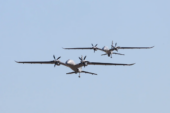
The aircraft chartered by Frontex from private companies as part of “Multipurpose Aerial Surveillance” (MAS) keep watch in the search and rescue regions of the Atlantic off Senegal and Mauritania – these are international waters. When a boat is sighted, the crew informs the competent authorities of the West African countries – including Cape Verde, which has designated its “Centre for Maritime Security Operations” (COSMAR) as a “Eurosur coordination centre”. Eurosur is the surveillance network to which, since 2014, initially only all Schengen states were connected with the Frontex headquarters in Warsaw. The videos taken by the surveillance aircraft are also streamed there in real time.
Before the flights from Praia began, the Frontex Fundamental Rights Officer Jonas Grimheden had expressed criticism. Because the aircraft are to pass on information about discovered migrants to authorities in Mauritania and Senegal as well. However, there are reports of deficits in the protection of human rights there, which is why effective safeguards should have been introduced before the flight service became operational, Grimheden thought. The Fundamental Rights Officer therefore called for an action plan that would take particular account of the prohibition of non-refoulement – the prohibition of returning people to countries where they face persecution.
More resources for Frontex
In July 2024, Commission President Ursula von der Leyen announced for her second term that she wanted to triple the “Standing Corps” to 30,000 members. The ProtectEU strategy for internal security, presented on 1 April 2025, reaffirmed this goal. However, the tripling of the Frontex troops has not yet been decided by the Council. The increase would also need to be addressed in the amending regulation, regarding scope, tasks and financial implications.
Little is currently known about the Commission’s further plans for a new Frontex regulation. On 31 July 2025, it launched a public consultation on the impact assessment for such a legislative revision. The public and interest groups were able to submit assessments until the end of November. The Commission is likely to propose that Frontex expand its operations in third countries and be allowed to carry out “return operations” there. The European Parliament had previously resisted this when the regulation was amended in 2019. Likewise, the Commission is likely to propose that Frontex should support so-called Dublin returns within the Schengen Area.
Possibly the proposal will also amend the EU Staff Regulations, which currently do not allow the transport of armed officers to third countries – this is an obstacle to the expansion of the “Standing Corps” and especially category 1 officers. To this end, Frontex could also set up its own procurement office in Warsaw, which would stock particularly expensive and heavy equipment for deployments in or outside the EU. Data exchange with third countries or with Europol is also subject to obstacles that Frontex would like to see removed.
Risk analysis for refugees and visa-free travellers
Frontex will also receive future tasks in implementing the reform of the “Common European Asylum System”: the new Screening Regulation provides, for example, that arriving asylum seekers must undergo a health check, a vulnerability assessment, identification or verification of identity, registration of biometric data in Eurodac (if not yet done), a security check, completion of a screening form, and assignment to a subsequent procedure. Identity and security checks are queried via the “Common Identity Repository”, which was created as part of the “Interoperability” project by merging several biometric databases.
Frontex, together with Europol, tested the new screening routine in a pilot project on Lampedusa in autumn 2025 on 261 asylum seekers. In future, this will affect all third-country nationals who have either illegally crossed the external border, applied for international protection during border controls, landed after search and rescue operations, applied for asylum at border crossing points, or are irregularly present on the territory without having been checked at the external border.
This year, Frontex will also be responsible for the IT-supported risk analysis of visa-free travellers, who will then have to register their border crossing with a European Travel Information and Authorisation System (ETIAS) – modelled on a US system. ETIAS will also be queried under the Screening Regulation.
Drone detection and defence
It is also planned that Frontex will improve its “situational awareness” at the EU’s external borders and build up resources for a faster response to “hybrid threats”. This is also to include drone defence. This is not new: Frontex has been testing technologies for years to detect and neutralise disruptive drones at the EU’s external borders. The aim is to prevent illegal overflights, smuggling and unauthorised surveillance.
Last summer, the EU border agency launched a “Counter-Unmanned Aircraft Systems (C-UAS) Prize Contest” for this purpose, in which smaller and larger arms companies took part. The EU Migration Commissioner, Magnus Brunner, also announced that a further €250 million from the border protection fund would be spent “specifically on drones”. The EU member states would then procure technology that Frontex has previously tested and evaluated.
More power, but little control
Currently, Frontex is based in Warsaw at two different locations in three rented buildings. For its new equipment, capabilities and competences, the border agency is now getting a new headquarters. The building is to be erected on a 70,000-square-metre plot of land that the Polish government made available to Frontex. It is to house a round-the-clock surveillance centre to direct Frontex operations and an “innovation and technology centre” that researches, develops and tests new technology for controlling and deterring migration. The new building will cost €250 million at current estimates. The planned loan financing of 75 per cent of the construction costs was controversial. Several member states expressed concerns that this could set a precedent for other EU agencies. The Frontex application was therefore rejected by the Council and only approved in a second round.
It remains to be seen whether and how governance and oversight of Frontex would grow with the new tasks and competences in the new regulation. The executive director and his three deputies are responsible for operational management. The political and strategic steering of the border agency is taken over by the Management Board, in which both each EU member state and the Commission are represented. There are no instruments for evaluating this operational and strategic management.
Nor is the oversight of Frontex comparable to that of a ministry in an EU state like Germany: the Union’s agency architecture does not provide for a superior body to give instructions to the Frontex Executive Director; according to the regulation, he has autonomy in all areas of competence. The European Parliament has at most rights to ask questions and request reports, but cannot impose sanctions – except with regard to the budget. Fundamental rights are currently protected by Frontex with its own officer employed at headquarters, but he likewise cannot enforce demands – such as the termination of a deployment in a host state under Article 46 of the Frontex Regulation. It remains to be seen whether the Commission will address these deficits in its proposal announced for this year.
Image: Frontex’ director visits Bosnia and Herzegovina’s Border Police (Frontex).


Leave a Reply