Boats, radar and training for coastguards in Libya, Tunisia, Egypt, Morocco, and above all Turkey: an EU presentation reveals the scale of its border externalisation. NGOs criticise the outsourcing of human rights violations.
The European Union is not only supporting Libya and Tunisia but is also massively assisting Turkey and other Mediterranean neighbours in building up their maritime border surveillance. This emerges from a presentation by the EU Commission to the so-called European Contact Group on Search and Rescue, which was published online on Tuesday. According to it, Morocco, Egypt and Lebanon also received extensive support, including boats, technical equipment and training for coastguards and navies.
Tunisia: boats and surveillance system
In Tunisia, the EU has supported the establishment of a maritime rescue coordination centre in Tunis, which includes seven sub-centres. Three of these coordination centres are under the authority of the military navy, four under the National Guard. These Maritime Rescue Coordination Centres (MRCC) are notified by EU member states or the border agency Frontex in order to bring boats carrying refugees back to North Africa.
The Tunisian navy is also receiving four 17-metre boats from the EU, and the coastguard five 20-metre boats. A large proportion have already been delivered; the remaining boats are to follow by the end of 2027. In addition, the EU is funding a radio system at 28 locations along the Tunisian coast as well as a coastal surveillance system, the tender for which is due to start in the coming months.
Libya: container-based coordination centre with tower
In Libya, the EU has funded the establishment of a mobile rescue coordination centre in Tripoli through the SIBMMIL programme since 2017. It consists of ten containers, including a training room, offices, a kitchen and accommodation, as well as a tower for surveillance and communication. Supported by aerial reconnaissance from Frontex, crossings by refugees from western Libya have been continuously declining since then – people are being brought back to the country by Libyan militias and units of the so-called coastguard.
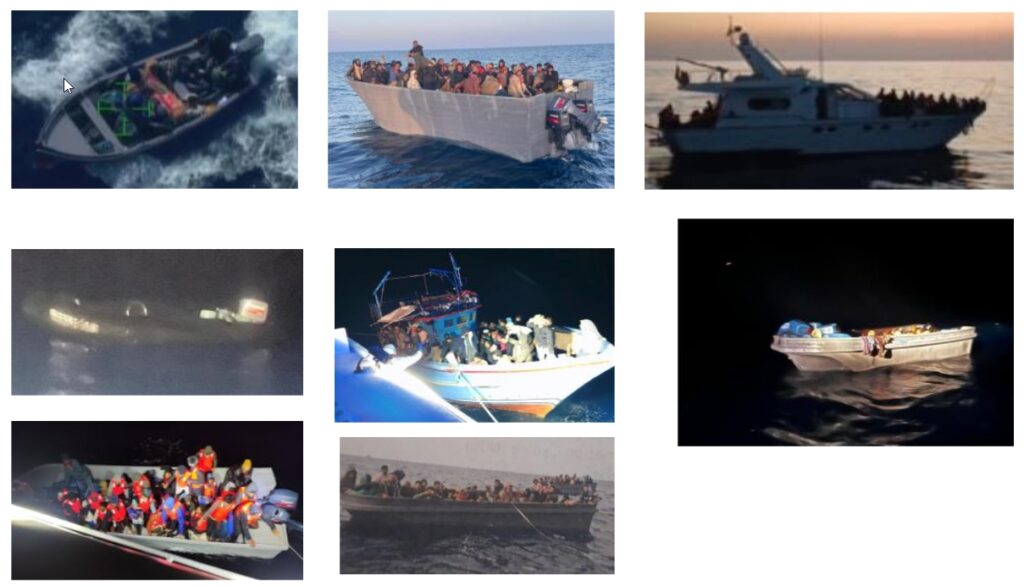
In total, according to the presentation, the Libyan military coastguard and the port security authority, which belongs to the Ministry of the Interior, received 25 boats funded by the EU, including five large patrol boats. On several occasions, these EU-funded units have attacked ships of the civilian rescue fleet in the Mediterranean.
More than 200 officers from Libyan police and military authorities were trained under the SIBMMIL programme. Further training was provided through the EU’s military mission “Eunavfor” in the central southern Mediterranean. Support for maritime migration deterrence is now set to be extended from western Libya to breakaway eastern Libya. The launch of the project was announced last week by the outgoing EU envoy to Libya, Nicola Orlando.
Egypt: ships, drones and training
The Egyptian navy has also received EU funding, so far comprising three 17-metre boats, as well as spare parts and security equipment. A 50-metre patrol ship is due to follow shortly; the border police will also receive drones and surveillance technology.
Via the International Organization for Migration, more than 280 officers from the navy, air force, border police and rescue coordination centre are said to have been trained. To facilitate exchange with border authorities in the EU, the Commission funded study trips to Cyprus, Spain, Italy, Portugal and Poland as well as joint exercises with Cypriot authorities.
Morocco and Lebanon: funding for border management
Between 2021 and 2024, Morocco received a total of €193 million from the EU’s NDICI instrument (Neighbourhood, Development and International Cooperation Instrument), of which €152 million was budget support for cooperation on migration and border management. €15 million is going towards a programme against “smuggling and human trafficking”. A further €160 million in budget support is planned for 2025 to 2027, currently being negotiated with the Moroccan authorities.
In Lebanon, the EU is funding the programme “Disaster Management, Port and Maritime Reform for Economic Recovery” with €6 million, implemented by the United Nations Development Programme. It also supports migration-related projects. Lebanon likewise received a rescue coordination centre at a naval base along with corresponding training. A further “border management package” worth €25 million is currently being negotiated with the government in Beirut.
Turkey receives the most equipment
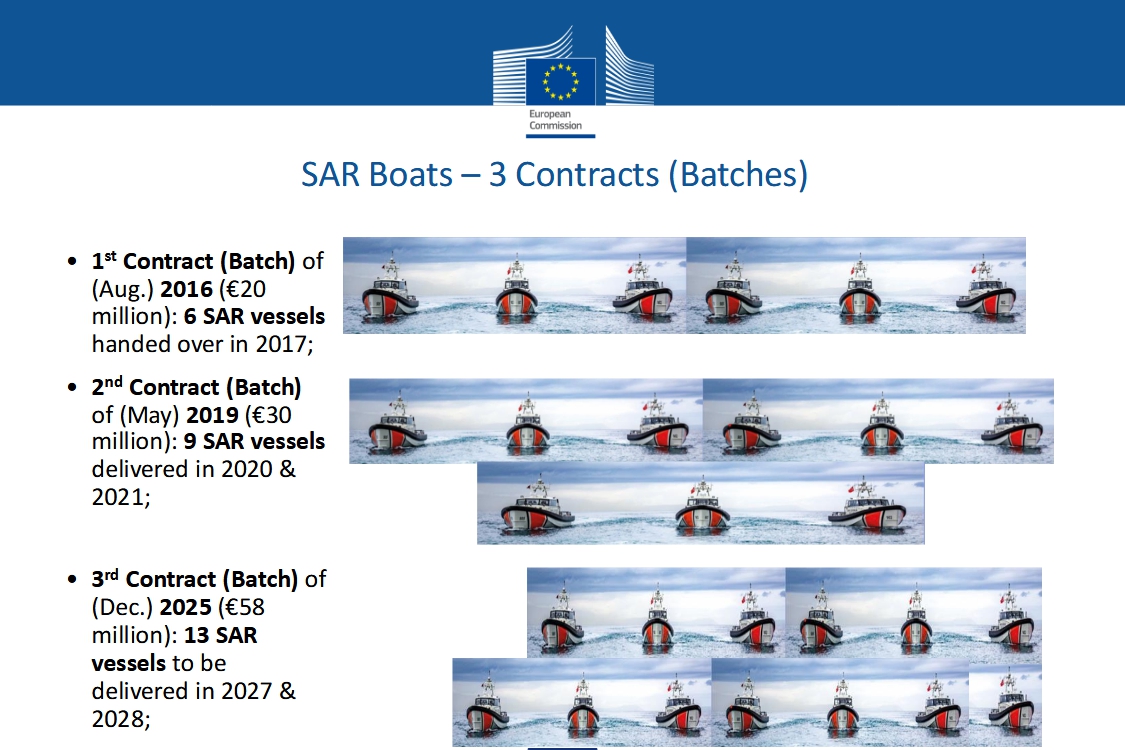
The largest amount of EU support for migration control goes to Turkey: by May 2024, the EU had delivered a total of 56 boats of various classes to the Turkish coastguard and customs authorities, including inflatable and rigid-hull boats as well as patrol boats. These were funded through the “Instrument for Pre-Accession Assistance” for EU candidate countries. In December 2025, the Commission signed a further contract worth €58 million for 13 additional ships and boats, due to be delivered in 2027 and 2028. In addition, the EU has already supplied ten mobile radar systems to the coastguard; these are mounted in large vans and can be positioned along the coasts facing Greece.
The EU Commission presents a macabre calculation: the boats from the first two deliveries reportedly clocked up 111,784 operating hours between 2017 and 2026 and rescued 27,255 people from distress at sea – often after they had been unlawfully sent back on the open sea from Greece, in violation of international law. According to the presentation, this equates to one person intercepted per four operating hours.
What the Commission does not mention: the Turkish coastguard frequently rescues people in the Aegean who have been regularly pushed back from Greece in violation of international law. Greek units steal the migrants’ boat engines or let them drift into Turkish waters on life rafts. The Turkish coastguard documents these pushbacks on its own website.
Criticism from German sea rescue NGOs
The aim of the EU measures benefiting its Mediterranean neighbours is to prevent people from reaching Europe, says Arne Kasten, managing director of the sea rescue organisation SOS Mediterranee Germany. People are intercepted on the high seas on behalf of the EU and returned to countries where torture, arbitrary detention and violence are documented. “In this way, human rights violations are accepted in order to further seal off Europe’s external borders.”
“The EU calls it ‘border management’, but it is an externalisation of responsibility,” a Sea-Watch spokesperson also criticises regarding the funding for boats, radar and training programmes. This is particularly evident in the example of Libya: “The EU is funding actors who commit violence against people seeking protection and return them to a country where they face further violence and torture.”
The EU’s outsourcing of border security also endangers the democratic principle of accountability. Marie Michel, political expert at SOS Humanity, points this out: “Far from European soil and parliamentary oversight, criminal actors are being commissioned to carry out human rights violations with the EU’s explicit support – without the political decision-makers in Europe being held accountable for it,” the German NGO “nd” explains.
New drone project by Frontex
The European Contact Group on Search and Rescue is an informal expert body of the EU Commission. It was established in 2020 at Italy’s urging and was intended to improve migration-related cooperation and the exchange of information between member states and other actors at sea. The German government participates through the Ministry of the Interior and the Ministry of Transport. Recently, however, the frequency of meetings has declined again.
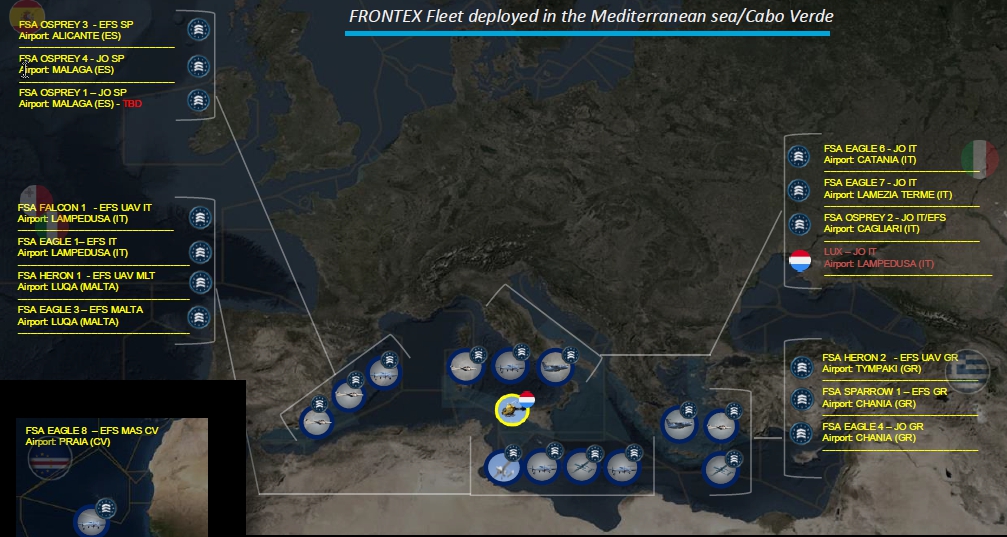
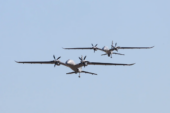
The Commission’s presentation was prepared for the eighth meeting of the contact group, which took place on 18 May at the rescue coordination centre in Larnaca, Cyprus. The country held the EU presidency in the first half of 2026. The EU border agency Frontex also reported in Larnaca on how it is expanding its capacities in the Mediterranean. According to this, Frontex has stationed eleven aircraft and now three large drones for aerial surveillance in Greece, Malta, Italy and Spain. Together with the Italian Coastguard, the agency has also trialled two drones over the past three months, launched from a patrol ship.
However, the technology is often not used for search and rescue, as frequently claimed within the similarly named European Contact Group: “Thanks to Frontex surveillance, the EU has extensive information about what is happening in the Mediterranean. However, this information does not reliably reach civilian sea rescue organisations,” criticises managing director Kasten of SOS Mediterranee.
Published in German in „nd“.
Image: Boats and ships delivered to Turkey; smaller inflatable boats are not included in the count (EU Commission).